
Toxics | Invasives | Nearshore | Habitat | Foundations
Focus Area 1
Sugar Island Habitat Restoration Project
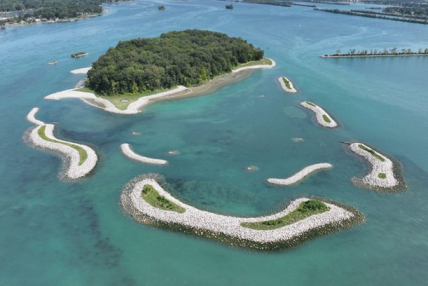
Owned and managed by the U.S. Fish and Wildlife Service, Sugar Island is part of the Detroit River International Wildlife Refuge and is one of the most important spawning areas for fish in western Lake Erie. This 29-acre island in the lower Detroit River is located at the mouth of Lake Erie in the Township of Grosse Ile. The southern end of Sugar Island experiences erosion as a result of exposure to high wind and wave action. This project explored the ecological value and feasibility of controlling shoreline erosion and simultaneously enhancing fish and wildlife habitat. NOAA’s Office of Habitat Conservation funded the project’s engineering, design, and construction phases through the GLRI and a regional partnership with the Friends of the Detroit River. The work included the restoration and stabilization of 1,600 feet of shoreline and the strategic construction of 5 habitat shoals, over 5 acres of marsh, and 20 acres of submergent wetland The restored area provides habitat for native Great Lakes fish, amphibians, reptiles, and birds.
Focus Area 2
Developing dreissenid mussel open water control technologies
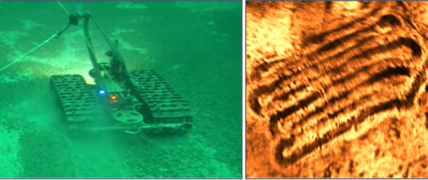
NOAA GLERL is partnering with Hibbard Inshore, LLC and the University of Wisconsin-Milwaukee in a multi-year study to use underwater vehicles for invasive dreissenid mussel control in deeper, soft substrate environments. In July 2024, the team operated a tracked remote operated vehicle (ROV) in small test plots at a depth of 45 meters in Lake Michigan. They monitored the plots before and after treatment using multibeam sonar, video surveys, and physical grab samples.
The team learned several lessons from this initial stage of the study, which was the first time that this type of vehicle has been used for invasive mussel control (see images). The tracked ROV with no implements attached was easy to steer and caused minimal disturbance to the sediment. Adding implements designed to displace and/or damage the mussels did increase sediment disturbance and reduced maneuverability, but preliminary results reveal fewer live mussels in those plots six weeks post-treatment. None of the methods tested appeared to negatively impact non-target benthic organisms. The team will use these findings to refine the implements for further testing in 2025.
Focus Area 3
Decision support tools to link nutrient reductions to harmful algal blooms and source water protection in Lake Erie
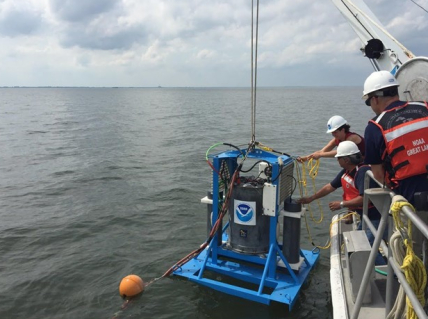
NOAA Great Lakes Environmental Research Laboratory (GLERL), with the assistance of NOAA National Centers for Coastal Ocean Science (NCCOS), has developed a network of 2nd Generation Environmental Sample Processors (2G ESPs) in Lake Erie to monitor and provide near-real time microcystin concentrations to stakeholders. The network consists of three 2G ESPs deployed at sites near Toledo, Ohio and Monroe, MI; cycling of the systems provides continuous coverage over the bloom season. During the 2023 and 2024 harmful cyanobacteria blooms in Lake Erie, the 2G ESP network was able to capture the evolution of bloom toxin content, in 2023 the ESP was able to capture a 650% increase in microcystin concentration over a 48-hour period near Monroe, MI. The result is a long-term, continuous data set of environmental conditions to assist in the development and assessment of management actions, support the development of predictive tools, and provide further insight into bloom ecology and toxin concentrations. Data can be accessed through GLERL’s HABs data site (https://www.glerl.noaa.gov/res/HABs_and_Hypoxia/esp-data/) and the Great Lakes Observing System (GLOS) Seagull platform (https://seagull.glos.org/landing offsite link).
Leveraging new satellite assets to improve remote sensing and modeling tools for monitoring and prediction of Great Lakes nearshore water quality
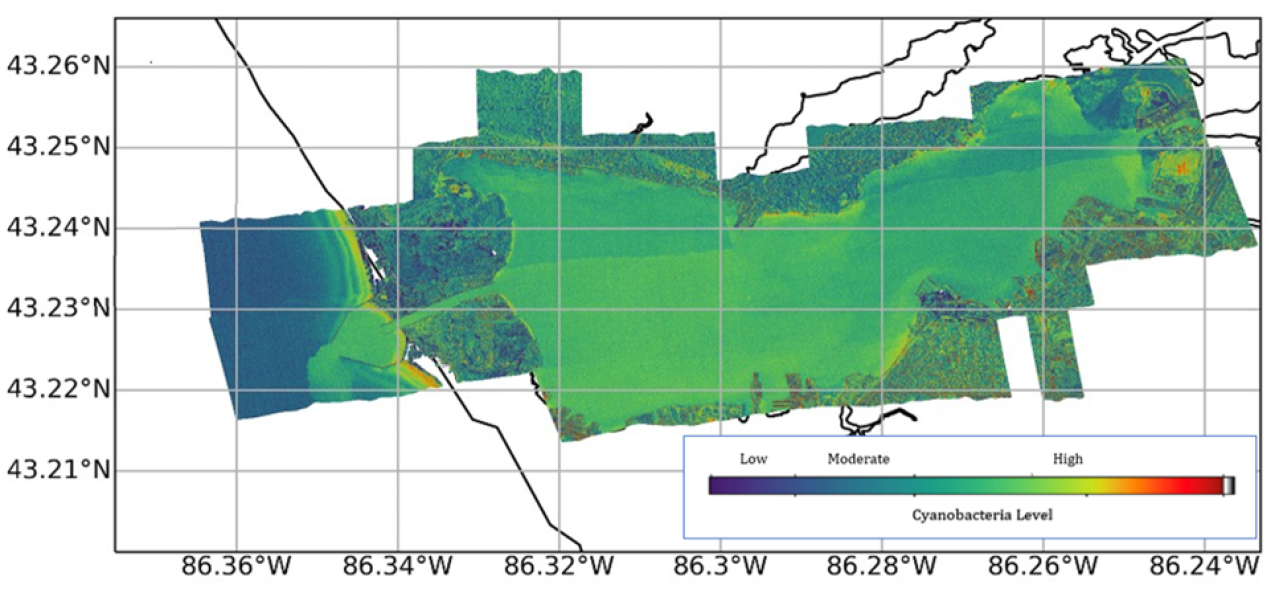
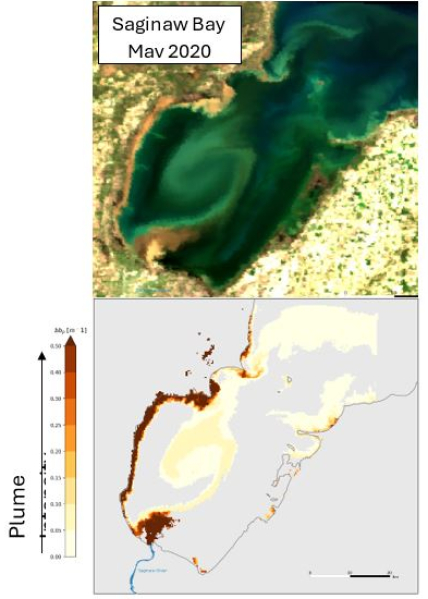
This GLRI funded project resulted in the development of a new high resolution satellite remote sensing capability to track the frequency and extent of nutrient carrying sediment plumes in the Great Lakes coastal zone. Utilizing new satellite sensing platforms allows for the detection of intense nearshore plumes that have not been previously observable from space. An example of the satellite-based plume detection in Saginaw Bay is shown in Figure 1. This new capability will help scientists to better understand how nutrients are delivered to the Lakes which in turn will aid in the development of predictive models to aid in nutrient management strategies.
Focus Area 4
Engineering and Design Plans for Great Lakes Habitat Restoration and Resilience
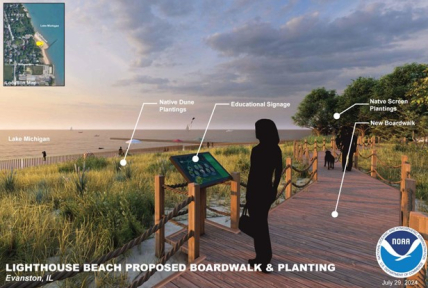
NOAA’s Office for Coastal Management has partnered with the Coastal States Organization and Great Lakes and St. Lawrence Cities Initiative to strengthen coastal resilience through priority, habitat-focused projects for states and communities. The result is the development of engineering and design plans that further advance projects toward implementation. In fiscal year 2024, NOAA’s partnership with the Coastal States Organization offsite link delivered plans for four nature-based projects: Little Calumet River–Marshalltown Marsh in Gary, Indiana; Dwight’s Point and Pokegama Wetlands State Natural Area in Superior, Wisconsin; and both Slaughterhouse Creek and Hay Creek in Carlton County, Minnesota. The Initiative for Resilient Great Lakes Coasts offsite link with the Cities Initiative delivered plans for seven nature-based projects: West Living Shorelines in Petoskey, Michigan; Frankfort Bluff in Frankfort, Michigan; Jackson Park Lagoon in Chicago, Illinois; Openlands Lakeshore Preserve Shoreline near Highwood, Illinois; McCormick Ravine Bluff near Lake Forest, Illinois; Lighthouse Beach in, Evanston, Illinois; and Valley Creek–Guenther Pond in Port Washington, Wisconsin. One dune management plan was also delivered for Clark Street Beach in Evanston, Illinois. With the completion of these 12 plans, 22 plans have been developed to date; an additional 12 plans will be completed by the end of 2025.
Marengo River Watershed: Understanding Wetland Ecosystem Benefits and Variability
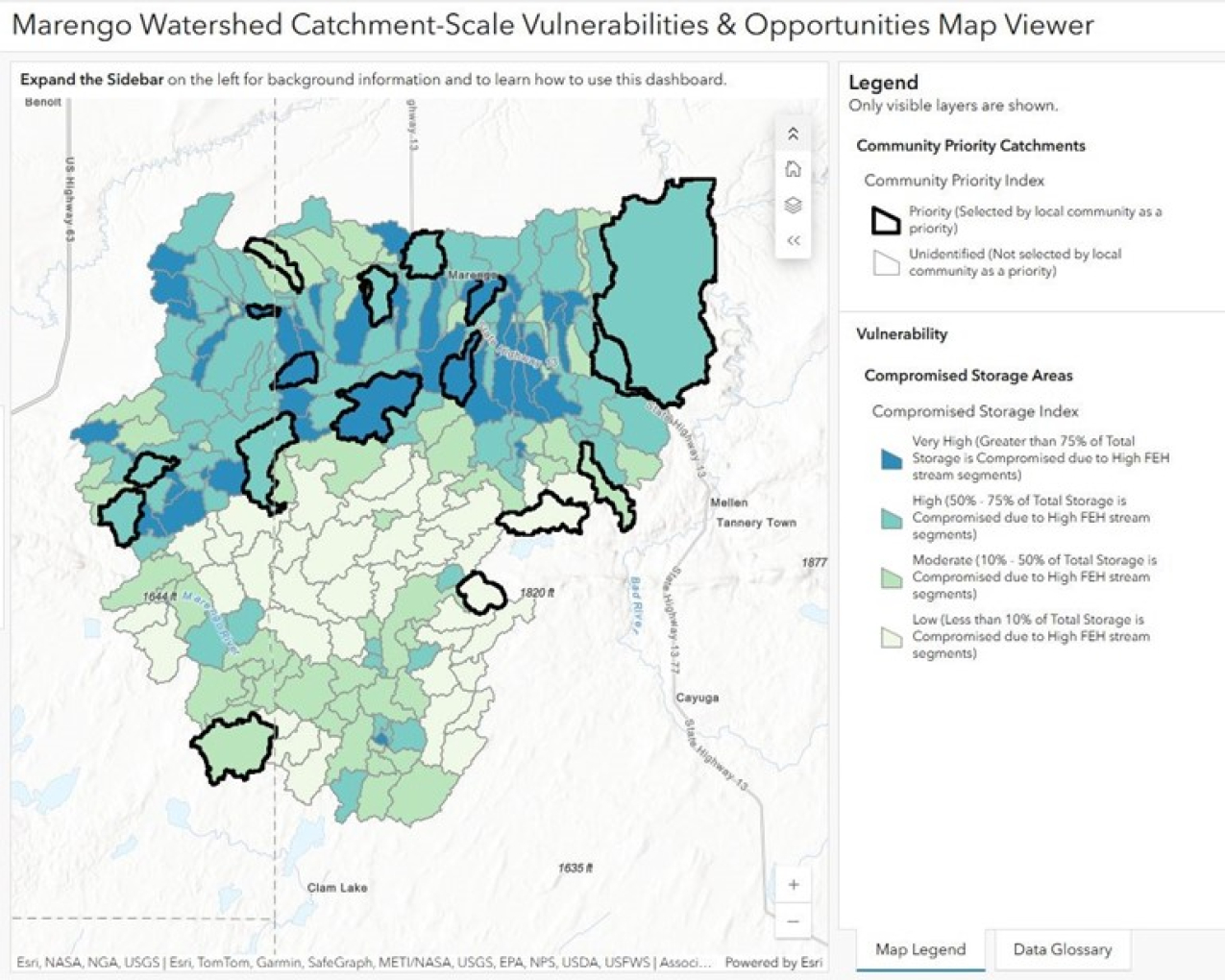
NOAA’s Office for Coastal Management completed a project with the Association of State Floodplain Managers and Wisconsin Wetland Association to support flood mitigation efforts. The project compared Wisconsin’s impaired Marengo River Watershed to an unimpaired watershed to analyze water flow and habitat health. The resulting assessment ranked wetlands for restoration and planning based on their ability to reduce flood hazards. Partners also explored relationships between habitat conditions, land use, infrastructure, and ecosystem services to prepare the foundational elements of a cost-benefit analysis. A report offsite link, which showcases the completed assessments, and an interactive map viewer offsite link, which displays data, were developed as a result of this effort. All project-related information is publicly available at the Natural Flood Management offsite link site hosted by the Association of State Floodplain Managers.
Nebagamon Creek Fish Passage Restoration Project
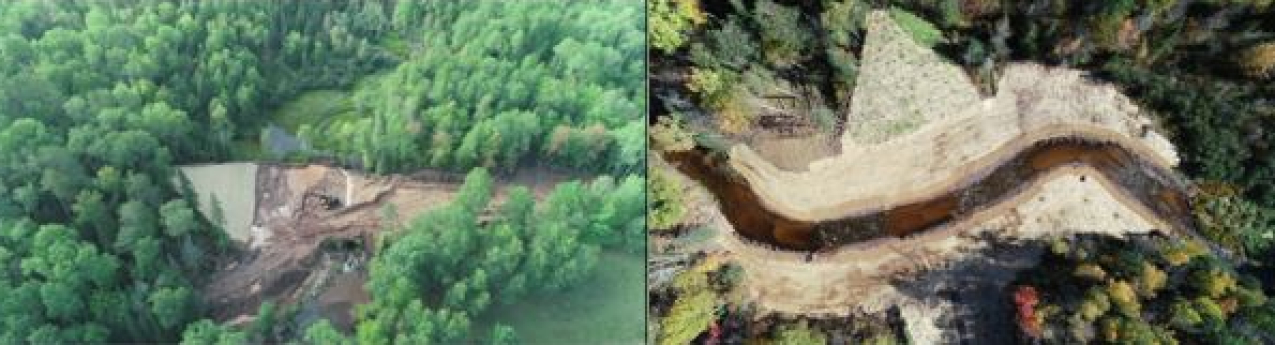
In FY24, a regional partnership between NOAA Fisheries and the Great Lakes Fisheries Commission completed a GLRI-funded $650,000 project that included the removal of a culvert and an abandoned railroad embankment which impeded migratory fish passage in Nebagamon Creek, a tributary to the Boise Brule River and Lake Superior. This work restored natural stream flows to allow for fish passage as well as downstream sediment transport. The project addressed a Lake Superior Committee priority to restore streams that negatively impacted brook trout production on south shore tributaries in Wisconsin’s portion of Lake Superior. This project also addressed the GLRI Action Plan III goal to identify habitats that support important Great Lakes species and take actions to restore, protect, enhance, and/or provide connectivity for these habitats.
Lakeview Wildlife Management Area Restoration Project
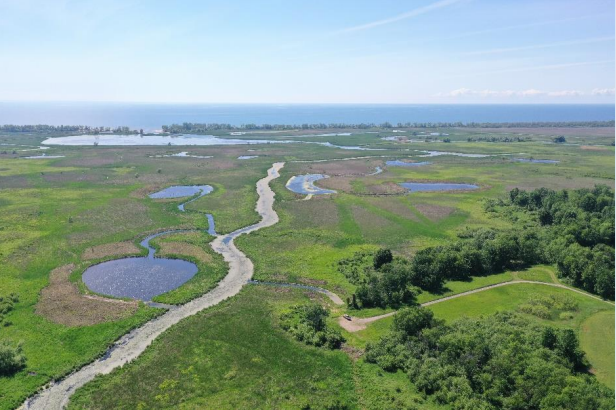
In FY24, a regional partnership between NOAA Fisheries and the Great Lakes Commission completed a GLRI-funded $750,000 project to improve habitat for fish and wildlife at Lakeview Wildlife Management Area in northern New York. Prior artificial manipulation of water levels resulted in a less-diverse habitat, with dense mats of cattails and encroaching invasive species. This project utilized “channeling and potholing,” a wetland enhancement technique to restore 180 acres of coastal wetlands, create 5,000 linear feet of 8-foot-wide channels, and improve 7 acres of open water habitat. This work improved the hydrology, water depths, amount of open water, and habitat connectivity, allowing access to shallow water areas for spawning and nursery habitat for fish and breeding habitat for migrating birds. The project was managed locally by Audubon Great Lakes and Audubon New York in collaboration with NY State Department of Environmental Conservation (landowner), Ducks Unlimited and the Great Lakes Commission.
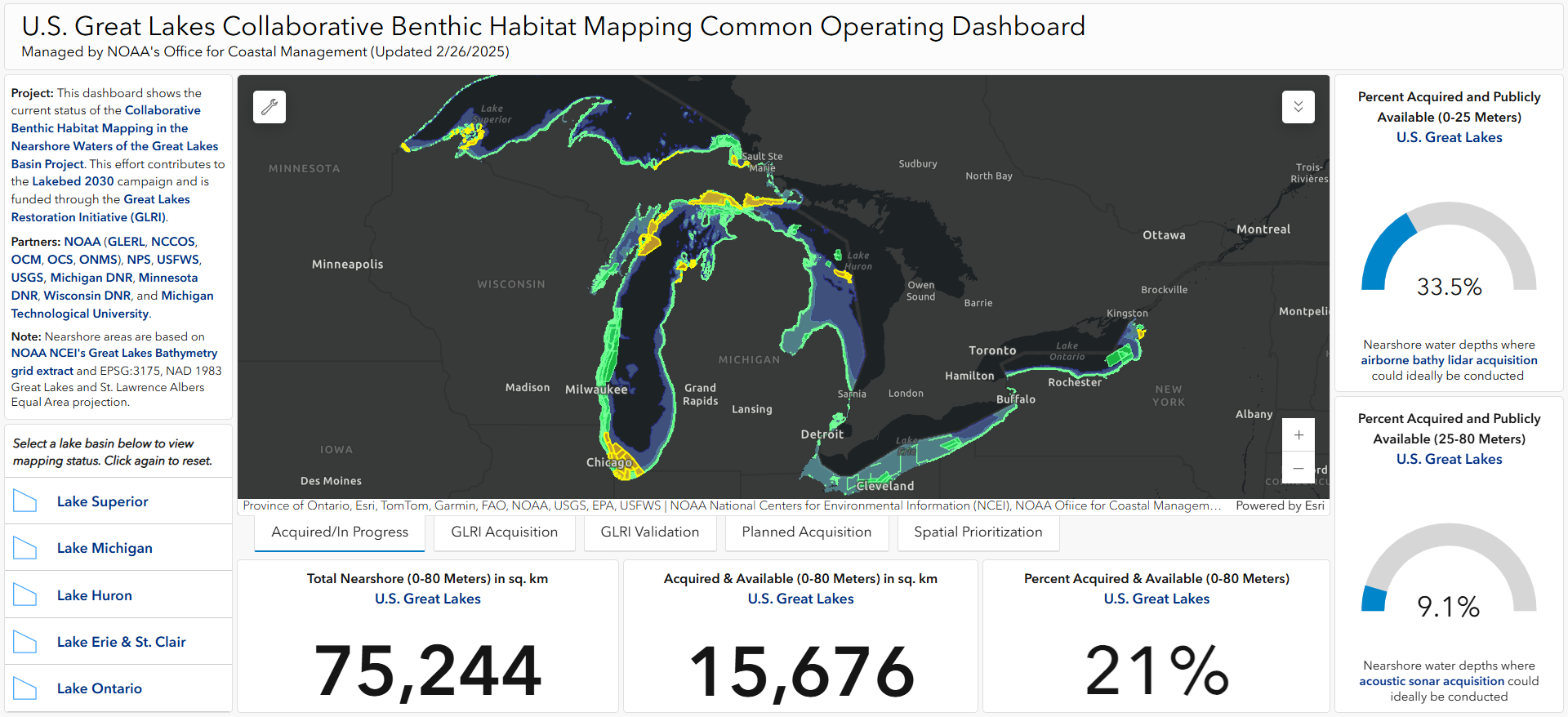
New Dashboard for Collaborative Great Lakes Benthic Habitat Mapping Project
A new U.S. Great Lakes Collaborative Benthic Habitat Mapping Common Operating Dashboard offsite link shows the current status of high-resolution bathymetric data acquisition and validation as well as benthic habitat mapping for the nearshore waters of the Great Lakes Basin. This information is essential for protecting the region’s vital freshwater resources and aquatic habitat, identifying critical underwater infrastructure, and improving navigational safety. The dashboard was developed to support the Collaborative Benthic Habitat Mapping in the Nearshore Waters of the Great Lakes Basin Project, a multiyear, multiagency project funded through the Great Lakes Restoration Initiative (GLRI) under Focus Area IV. The project addresses critical bathymetry and benthic habitat data gaps for the nearshore waters of the U.S. Great Lakes through the acquisition of new airborne lidar, vessel-based sonar, and high-density benthic habitat characterization mapping products to inform habitat restoration and other vital management applications in the region. This effort also contributes to Lakebed 2030 offsite link, a regional campaign seeking to make high-resolution bathymetry data available for the entirety of the Great Lakes by 2030.
Focus Area 5.1
NOAA B-WET: Engaging Students and Teachers in Local Watershed Studies Helps Support Future Generations of Great Lakes Stewards
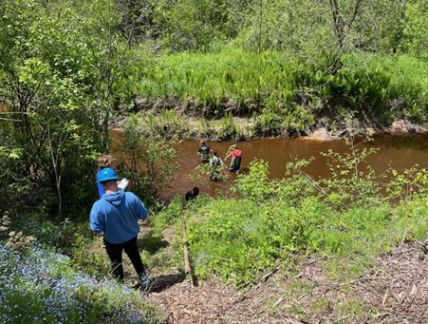
NOAA’s Great Lakes Bay Watershed Education and Training (B-WET) in the Great Lakes region supports meaningful watershed educational experiences for students and professional development for teachers. In 2024, Lake Superior State University B-WET project, "Supporting Data-centered 3P Student Learning Through Teacher and Student Scaffolded Experiences Using MiWaterNet Stream Monitoring" completed stream health and water quality monitoring work with high school students and teachers in the eastern upper peninsula of Michigan. Students and teachers at Brimley, Pickford, Rudyard, and Les Cheneaux Community schools all worked to strengthen their data and freshwater literacy skills to better prepare them to critically use and evaluate data in their own watersheds that drain to both Lake Superior and Lake Michigan. The project developed connections between students and local stakeholder organizations to learn how MiWaterNet data can build knowledge, stewardship, and conservation of Great Lakes resources. A participating biology teacher reflected that “It was inspiring to see how engaged the students were and how they recognized the importance of mitigating pollutants in our watershed. Their dedication to environmental stewardship was truly commendable.
Focus Area 5.2
NOAA’s Great Lakes Environmental Research Laboratory SOARs Under the Clouds to Monitor Harmful Algal Blooms
NOAA’s Great Lakes Environmental Research Laboratory flies a hyperspectral camera in a crewed aircraft that monitors cyanobacteria harmful algal blooms in the Great Lakes. This activity started in 2015, immediately after the drinking water crisis in Toledo, Ohio, in 2014. Airborne data is uniquely acquired beneath the clouds. This is a widely used asset to document where the bloom is at when a passive satellite is unable to detect their location.
The flights are currently bi-monthly over the Great Lakes during the bloom season and images are used to alert drinking water municipalities and stakeholders of the proximity of the cyanobacteria bloom at an unprecedented one-meter scale. A typical flight is done during on-water measurements of water quality parameters and bloom toxicity. These on-water measurements are used to validate the hyperspectral images.
This work is funded under the Synthesis, Observations and Response (SOAR) project at the NOAA Great Lakes Environmental Research Laboratory (OAR) and in partnership with the Cooperative Institute for Great Lakes Research.