




In July 2016, extreme rainfall of eight to ten inches within an eight-hour period caused severe flooding in Ashland County, Wisconsin. Extensive flooding damages impacted community infrastructure as well as critical habitat in the area. These impacts are expected to worsen due to climate change as intense precipitation events, similar to this one, become more frequent. Preserving and restoring wetland functions is a cost-effective means to prevent future flood damages while maintaining water quality.
Partners in Wisconsin realized that many wetlands in the region were degraded; the wetlands were losing their filtration and storage capabilities. This project compared the impaired Marengo River Watershed to an unimpaired watershed to analyze water flow and habitat health. The resulting assessment ranked wetlands for restoration and planning based on their ability to reduce flood hazards. Partners also explored relationships between habitat conditions, land use, infrastructure, and ecosystem services to prepare the foundational elements for a cost-benefit analysis. This analysis can be used to further support flood mitigation efforts. Throughout the project's lifespan, partners engaged key community members to gather input.
All project-related information is publicly available through the Natural Flood Management Hub site offsite link hosted by the Association of State Floodplain Managers.
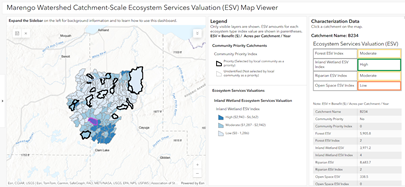
Accomplishments:
- Development of an interactive map viewer offsite link for the Marengo River Watershed
- Development of the final report, Assessing Flood Vulnerabilities and Nature-Based Solutions, Marengo River Watershed, WI offsite link
Funding:
FY2021: $575,000
Contact: Brandon.Krumwiede@noaa.gov
Partners: Association of State Floodplain Managers, Wisconsin Wetlands Association