
Hello everyone! My name is Sophia Brice and I am a class of 2023 Hollings Scholar. I was fortunate enough to have spent this past summer at the Hollings Marine Laboratory in Charleston, South Carolina, where I conducted research with the Coastal Marine Mammal Assessments Program. My internship focused on comparing aging techniques on stranded Tamanend’s bottlenose dolphins (Tursiops erebennus) along the South Carolina coast.
Why is dolphin age important?
In Charleston, and other areas on the Southeast coastline, marine mammal strandings unfortunately occur for a variety of reasons. Studying demographic data of these animals, such as age, can help us better understand underlying causes and patterns of these strandings. Therefore, my project aimed to compare two different aging methodologies to highlight potential benefits and limitations in estimating ages of stranded bottlenose dolphins.
Comparing aging methods: teeth versus flippers
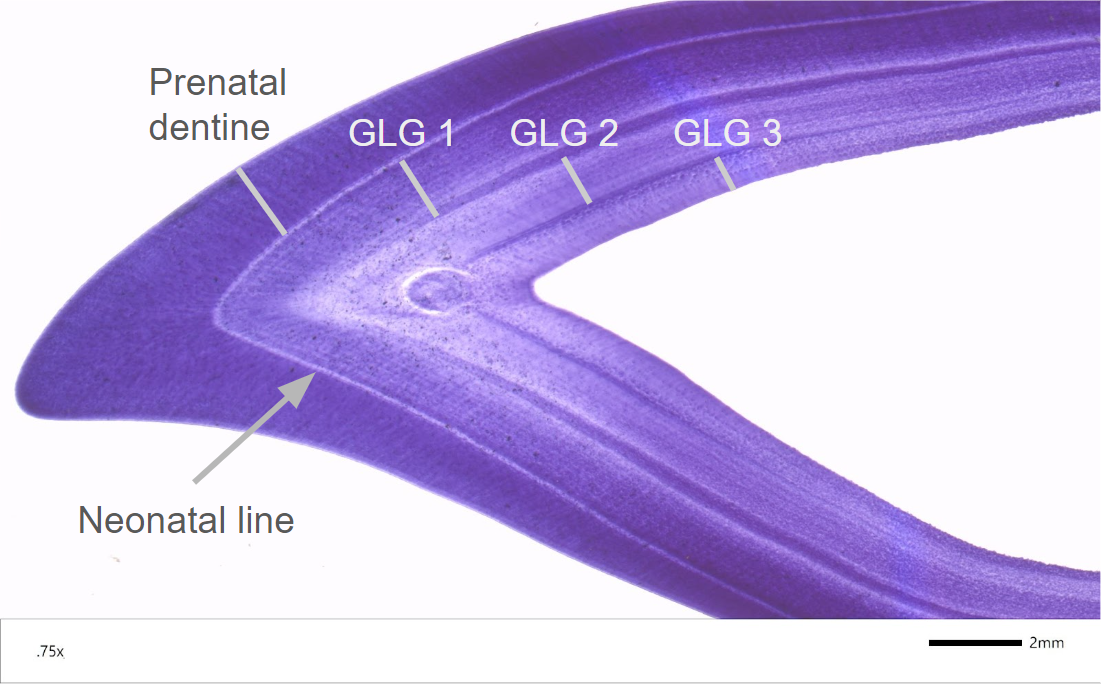
Dolphin teeth have distinct growth layer groups, which are layers of dentine that are deposited annually. This means that you can count the number of growth layer groups in a dolphin’s tooth, just like rings in a tree, to determine how old they are.
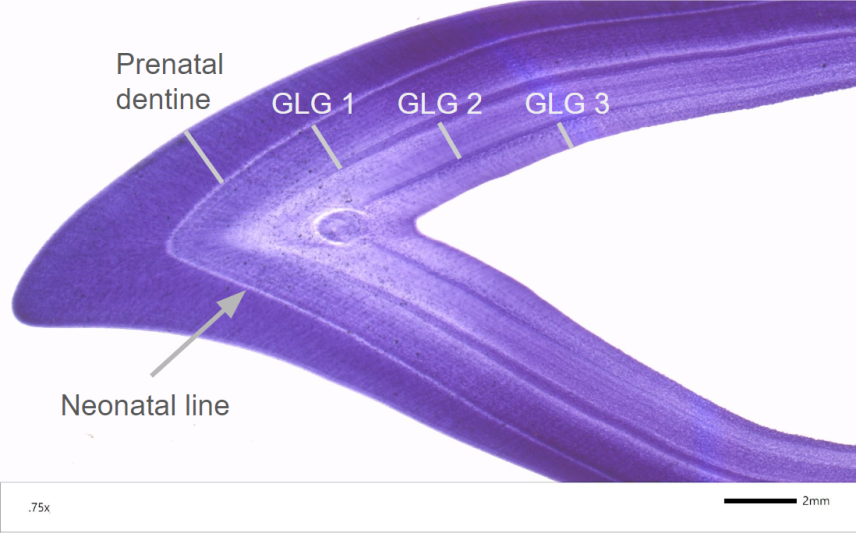
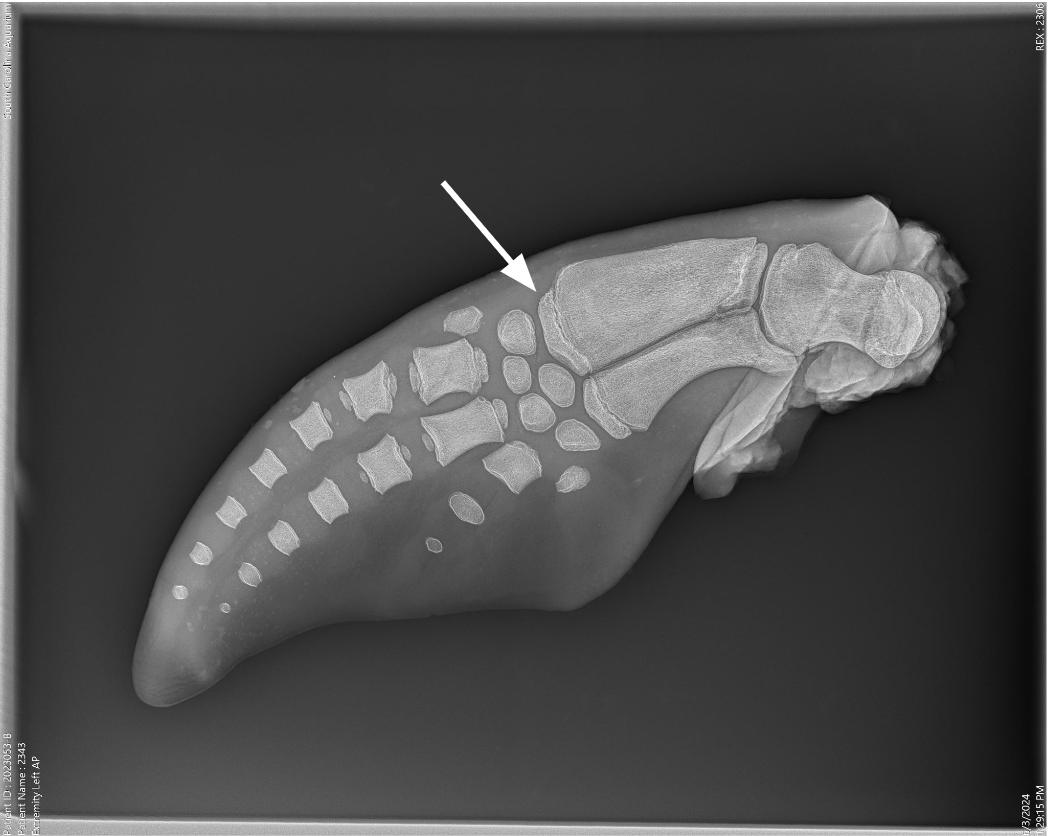
A newer aging method is pectoral flipper radiography. This process involves using radiographs (x-rays) of dolphin flippers to determine their age based on bone development. We know how dolphins’ flippers develop over their lifetime, so we can look at a flipper and use that knowledge to estimate their age. In older animals, radiography tends to be more accurate than using teeth because the growth layers in teeth compress as the animal ages.
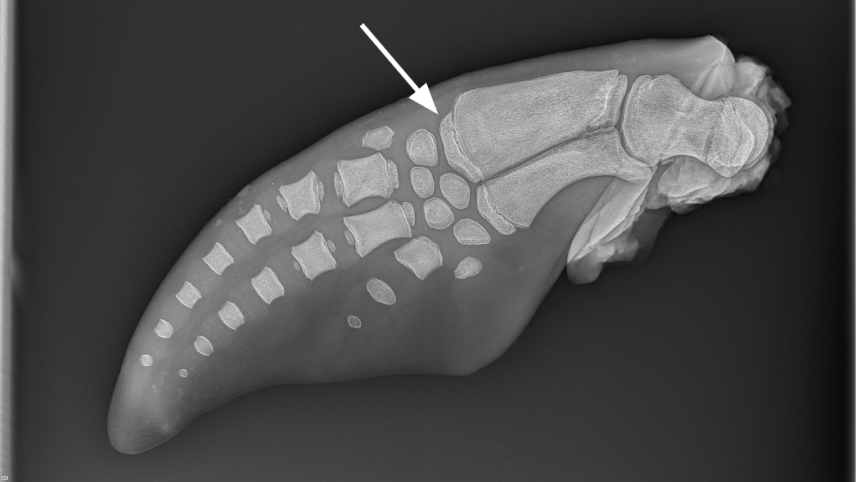
Surprisingly, I found that the aging results from the tooth sectioning process were more accurate than the radiography method. This highlighted a need to improve radiography aging methodology for deceased bottlenose dolphins because it is a quicker and more efficient method that requires less equipment than tooth sectioning.
Other internship experiences
When I wasn’t busy sectioning teeth or analyzing radiographs, I got to participate in other exciting activities with members of the marine mammal program. This included helping out with field work observing human interactions on wild dolphin strand feeding behavior, processing dolphin stomachs and intestines to look for the presence of microplastics, and even assisting in the stranding response and necropsy of a deceased dolphin.
I am extremely grateful for this wonderful opportunity to conduct my own research project at a NOAA facility and strengthen my abilities as a young scientist. This internship was incredibly fulfilling by providing me with new skills, networking opportunities, and solidifying my passions and career goals for the future.
Sophia Brice, 2023 Hollings scholar
Sophia is a class of 2023 Hollings scholar and a Marine Biology major at Florida Southern College.