
When most people think about oysters, they’re debating the best way to order them: raw or rockefeller. Many, including myself, don’t always think about the incredible amount of work that goes into bringing fresh oysters from the farm to our table. My name is Liz Roros, and I spent my summer Hollings internship working with oyster farmers in Southeast Alaska to test different oyster gear that could reduce farmer labor while still growing marketable oysters. What we’ve found so far could change the face of oyster farming in Alaska.
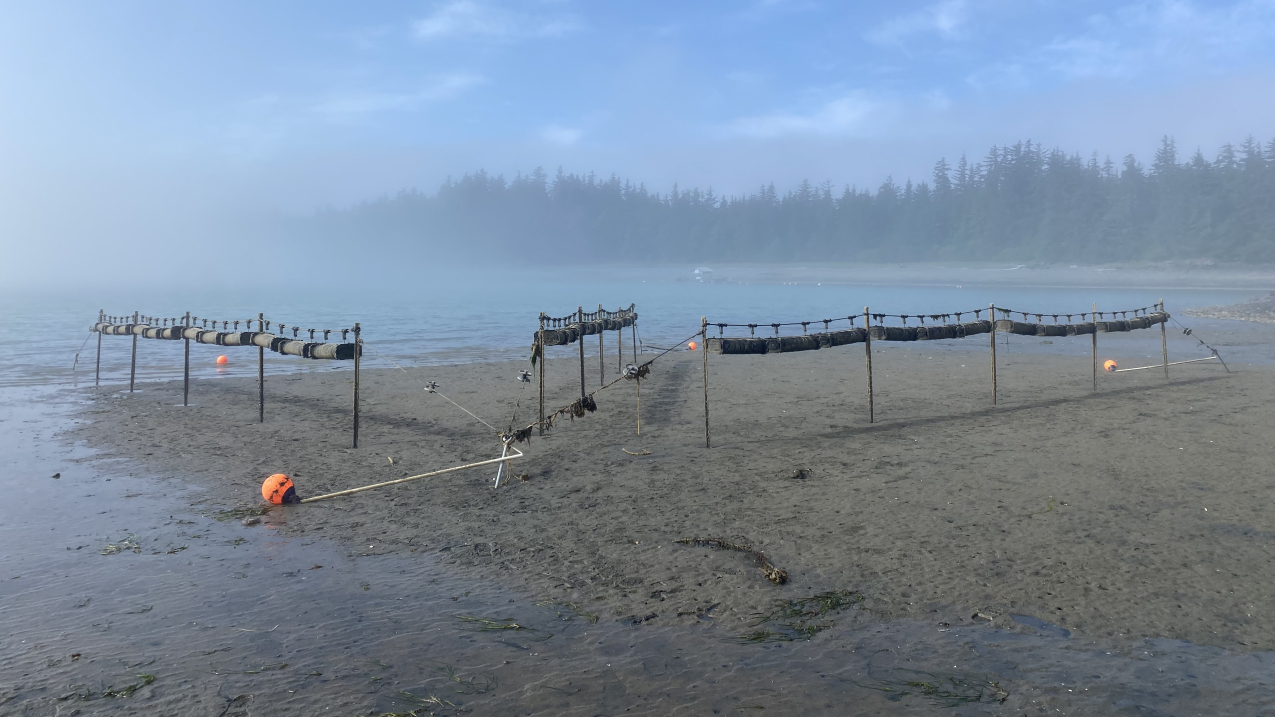
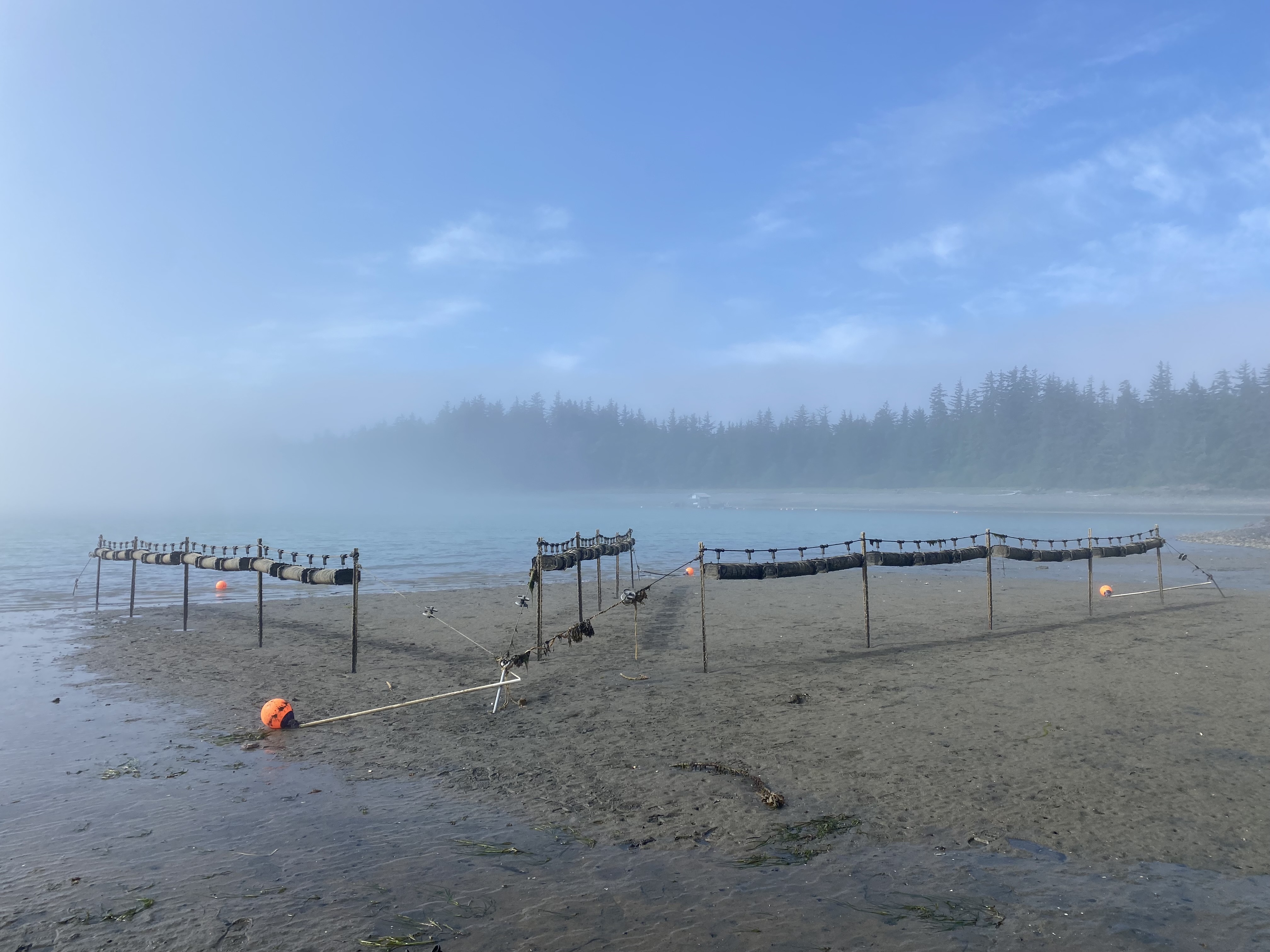
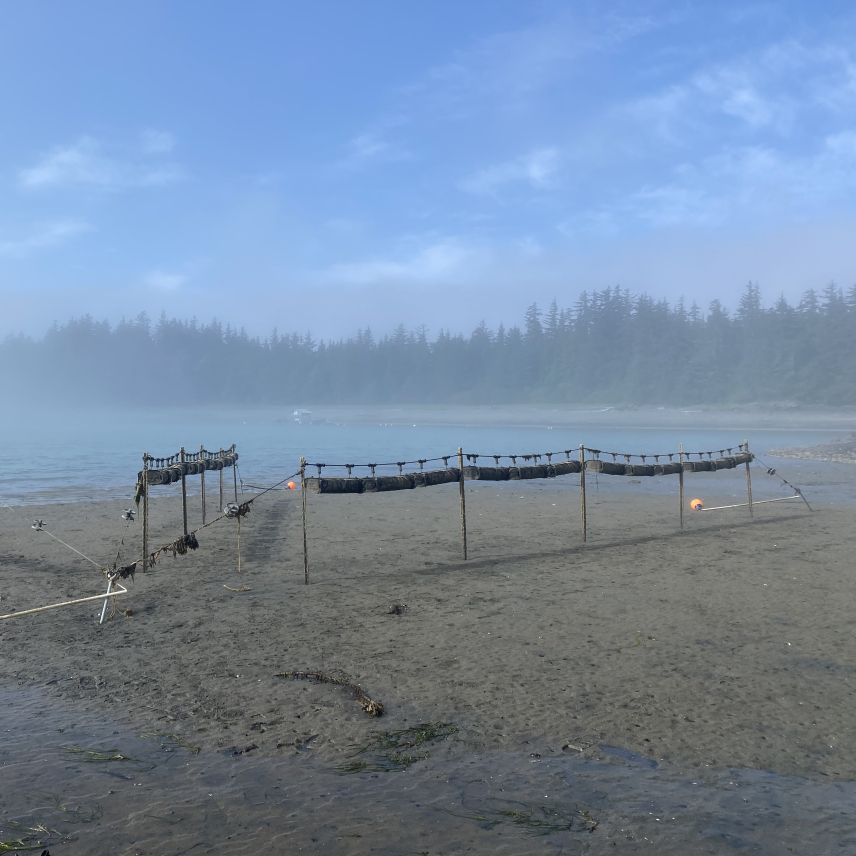
An intertidal array with three pivot lines of twelve tumble cages at Salty Lady Seafood Company in Alaska. These cages were exposed to air during low tide and were fully submerged during high tide. (Image credit: Liz Roros)
Growing oysters in Southeast Alaska
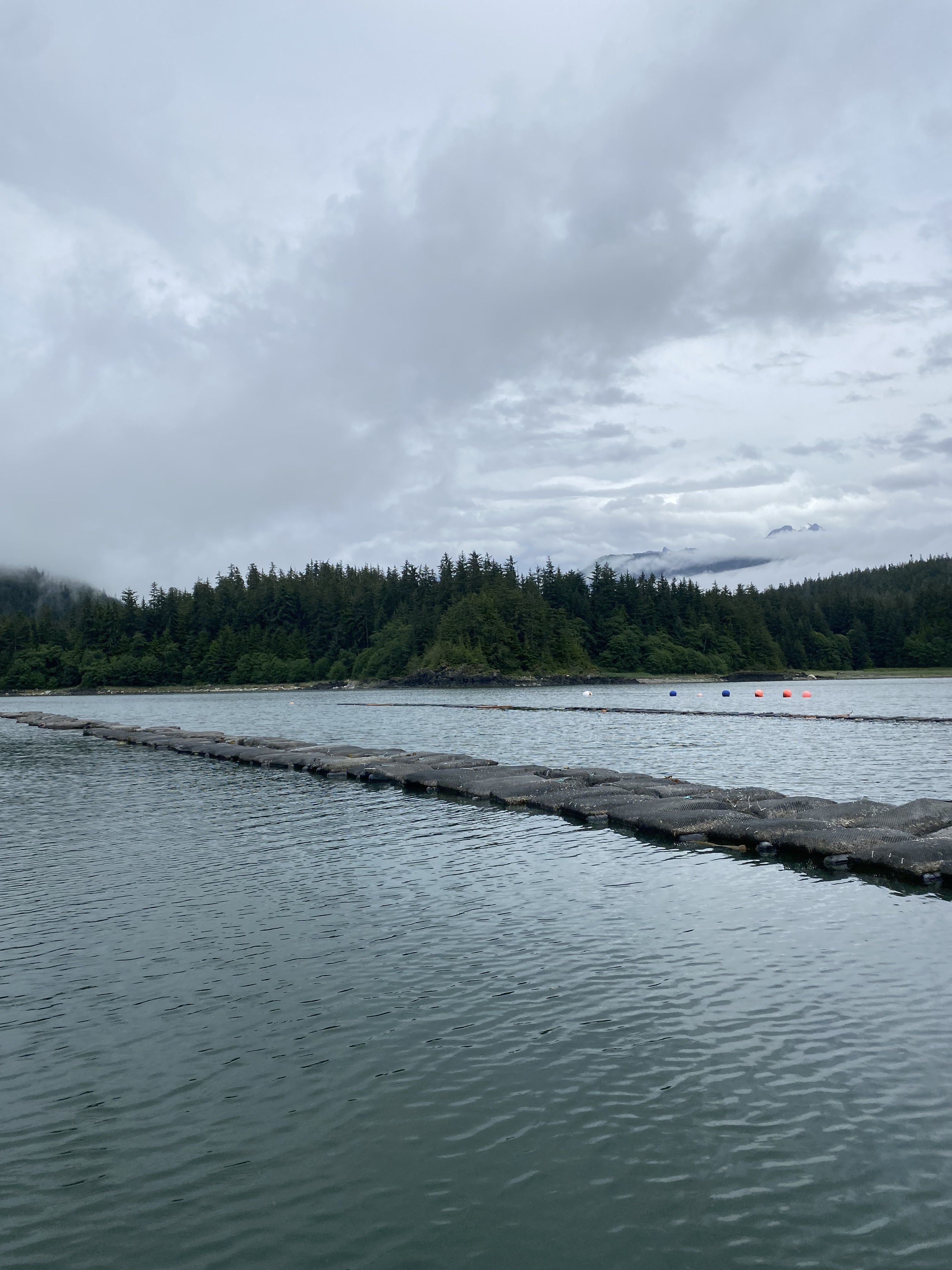
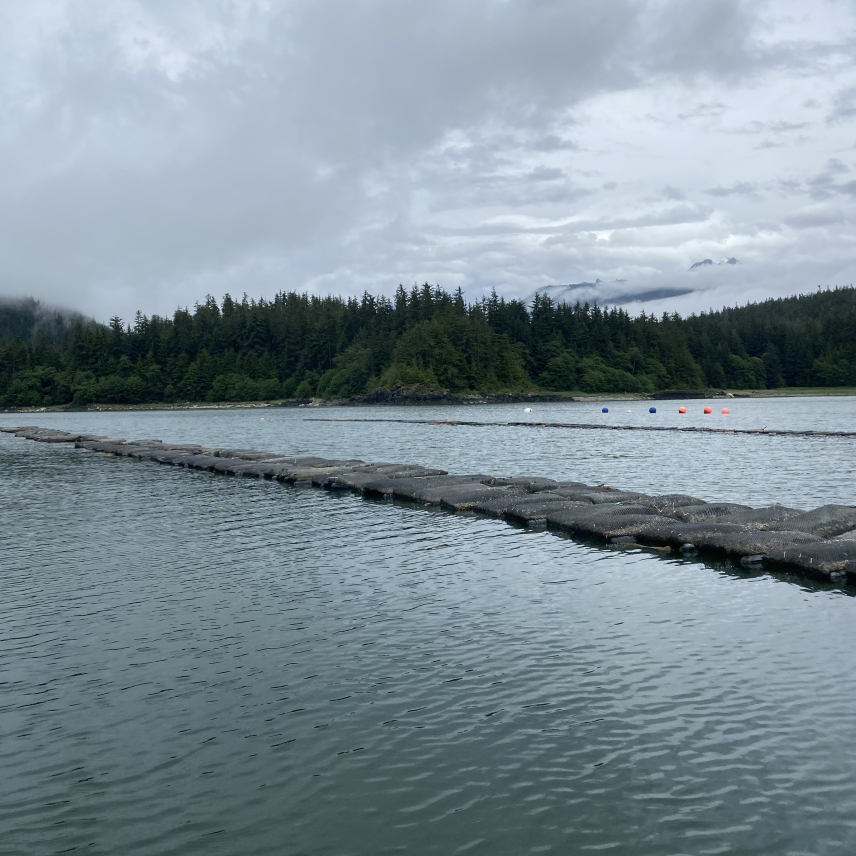
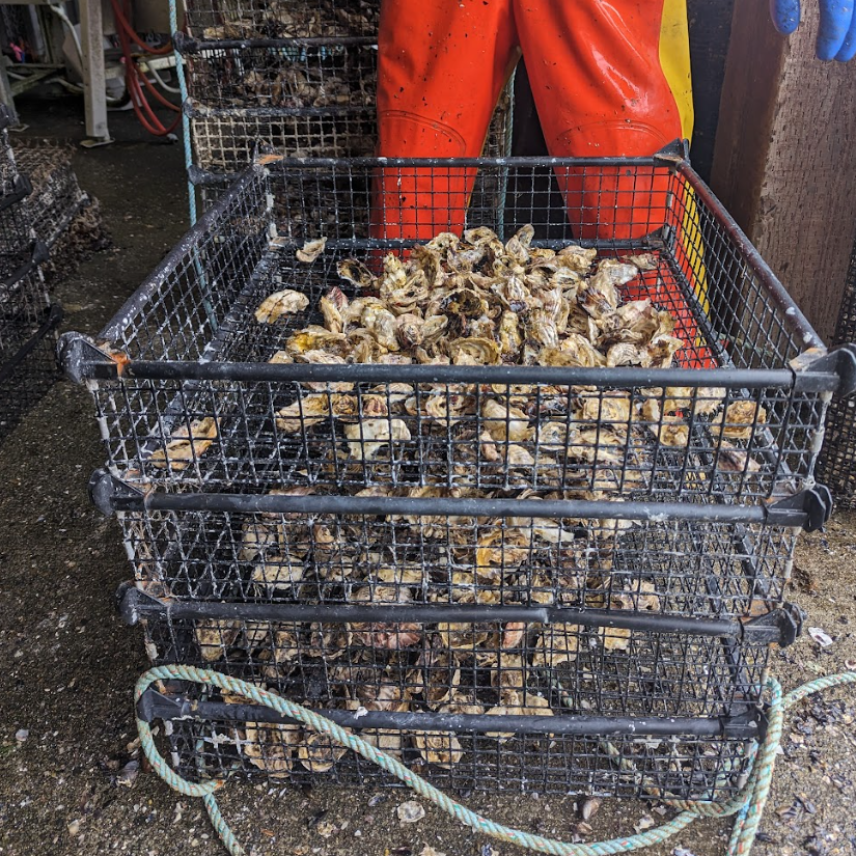
Southeast Alaska is not home to native oyster species, so the oyster market is driven by farmed oysters — and farmed oysters are labor intensive. Farmers purchase Pacific oyster seed (oyster larvae that have settled and attached to a hard surface) from out of state suppliers then primarily rely on mesh bags that float in the water and stacks of baskets that hang in the subtidal to grow their oysters to marketable sizes.
Throughout this growth process, farmers work day in and day out lifting bags, sorting and tumbling oysters, removing algae and mussels, and re-deploying gear to grow oysters that find their way to consumers' plates. Aside from heavy labor, constant water movement, tidal changes, and biofouling create additional challenges when growing marketable oysters in Alaska.
Traditional oyster farming in Alaska
Exciting innovations
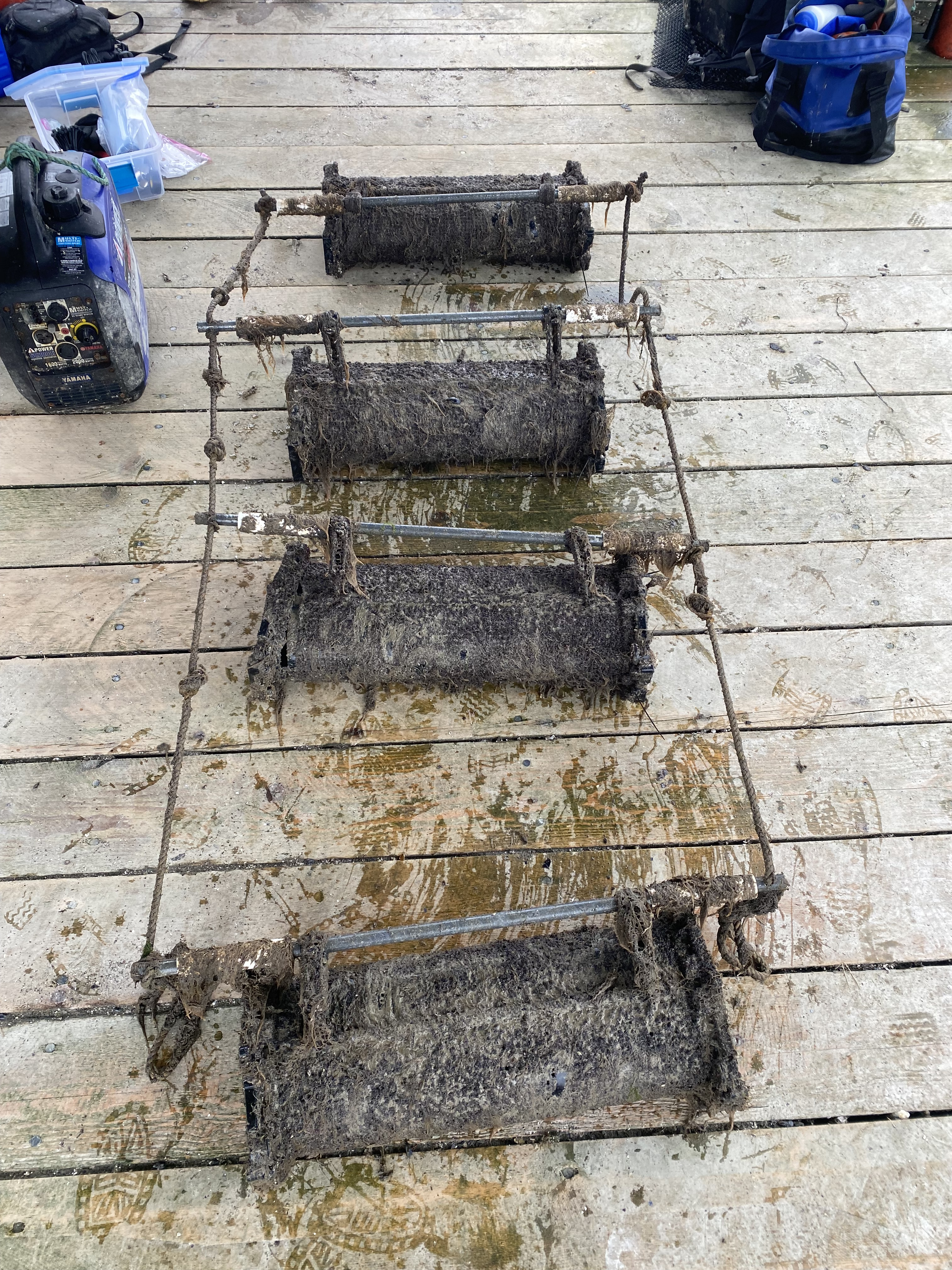
My project worked to bring a new, less labor-intensive method of farming to Southeast Alaska’s water called tumble culture. The tumble culture method uses cylindrical plastic cages that move with the changing tides to grow oysters. The best thing about these cages is that they naturally tumble oysters as they grow, creating a rounded, deep cup oyster which is desirable for the half-shell market. The cages also have periods of air exposure during low tides preventing the full settlement of any unwanted species, like barnacles and mussels.
My project
At Salty Lady Seafood Company in Juneau, Alaska, we deployed tumble cages in the intertidal and subtidal zones. At the end of June and July, I gathered data on different shell measurements and weights of the oysters from each of our two gear configurations:
Intertidal array
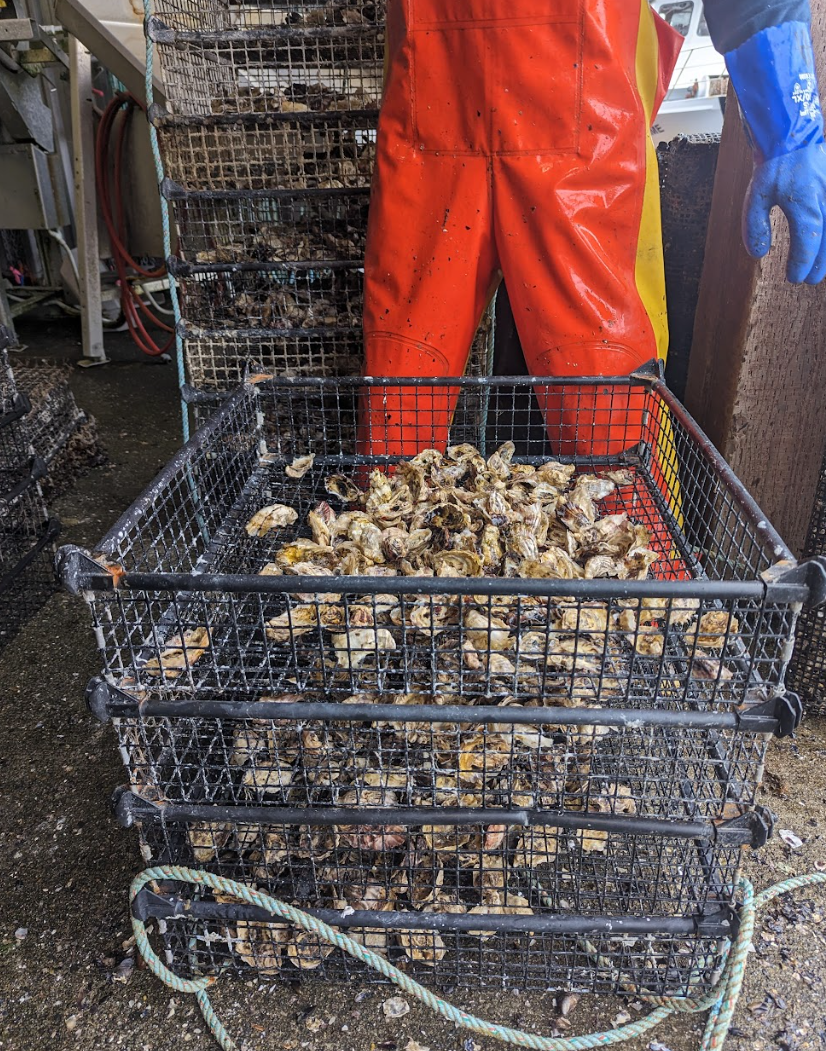
Subtidal stacks

Overall, the intertidal oysters seemed to be the most promising. When comparing our intertidal tumble cages to the farm’s traditional floating bags and stacks, the oysters grew comparably and became slightly more marketable. Even better, the intertidal oyster cages have little to no biofouling species. Further, besides building the array, we put no manual labor into growing those intertidal oysters. In comparison, our subtidal oysters seemed to have grown the largest shells; however, the cages had extensive biofouling and needed some additional cage upkeep.
A new age of farming?
If our intertidal tumble cage oysters continue to grow the way they are now for the rest of the growing season, we could help bring farmers throughout Alaska a new sustainable, profitable, and less labor-intensive method of growing oysters!
Liz Roros, 2023 Hollings scholar
Liz is a class of 2023 Hollings scholar and a Marine Science major at the University of Delaware.