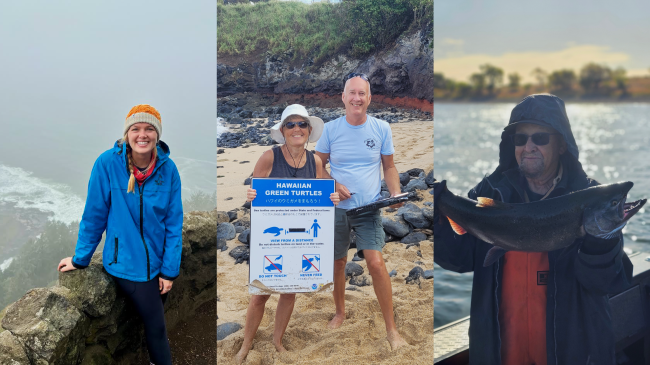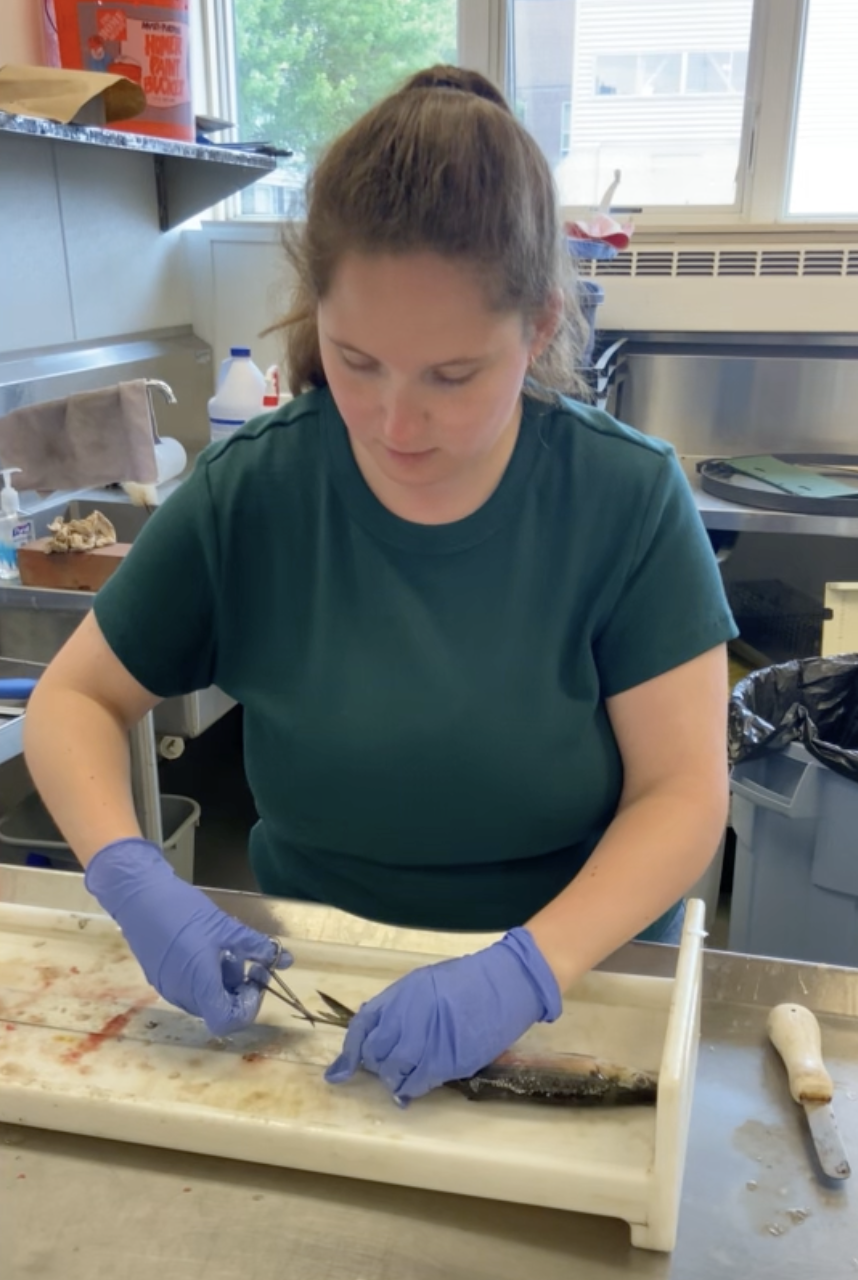

Hi everyone, my name is Aileen McDonald, and this summer, I interned at the NOAA Fisheries Maine Field Station in partnership with Maine Sea Grant offsite link to study the sustainability metrics of river herring during restoration.
I am a rising senior majoring in Environmental Science and minoring in Data Science at American University, and I have always been interested in understanding more about the sustainability of fisheries ecosystems and the factors that contribute to the well-being of fisheries. This internship was a great opportunity to learn more about sustainable fisheries and the type of careers that are available within fisheries science.
I want to share some of my favorite takeaways about fisheries and marine science from my summer internship in Orono, Maine.
1. There are so many different types of roles.
Throughout the summer, I met many people doing many different jobs in many different roles all with the same priorities of supporting fisheries. I had not realized how many different types of jobs there are within fisheries — there are science, outreach, education, and communication roles in both Maine Sea Grant and NOAA Fisheries.
With so many types of roles, each person is able to find one that fits their individual skill set. During the summer, I had conversations with my mentors about graduate school and careers in fisheries science, and based on my skill set, this summer helped me solidify my goal of becoming a quantitative fisheries scientist.
2. Not every day will look the same.
During the summer, my mentors, John Kocik, Ph.D., and Justin Stevens, Ph.D., took me and my fellow interns along for a variety of experiences in addition to our typical day-to-day activities. Oftentimes these experiences were events they would be attending and invited us interns to join. This included activities such as:
- Estuary surveys on the Penobscot River every other week
- A rapid stream assessment training day
- Visiting the two federal fish hatcheries in Maine
- Attending a public meeting about the state of salmon
- Attending a monthly all-day Maine Sea Grant team meeting
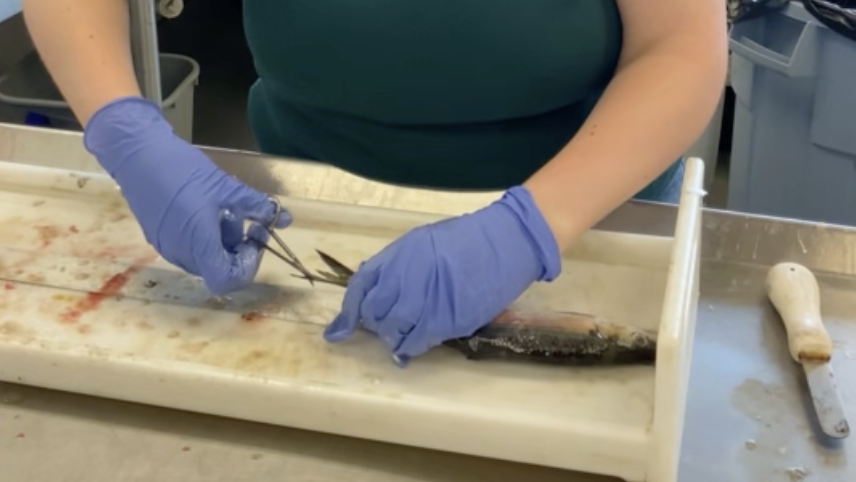
This showed us that the work that is conducted in fisheries can involve sometimes going out into the field, going to conferences or meetings, analyzing data, processing fish, and more.
3. There are always new things to learn.
Both in terms of ever-evolving research and in terms of new experiences, there is so much to be explored in fisheries and marine science. This summer, I was able to use technologies I had not used before during the bi-weekly estuary surveys and during the rapid stream assessment training. I also built upon my skills in R studio to analyze the River Herring data for my project and create data visualizations and statistical analyses.
When I attended the public meeting about the state of the salmon, listening to the current research from different agencies and the questions they had for one another showed that they too were learning from one another on how to best collaborate on salmon restoration. It is evident that there are always new things to learn in fisheries as new research develops.
Aileen McDonald, 2023 Hollings scholar
Aileen is a class of 2023 Hollings scholar and a student at American University majoring in Environmental Science and minoring in Data Science.