
Hi everyone! I’m Sofia Gluskin, a 2021 NOAA Hollings scholar and senior at the University of South Florida in Tampa, Florida, majoring in biology with a concentration in ecology and evolution. During my summer internship, I worked under Dr. Steve Lonhart at Monterey Bay National Marine Sanctuary and alongside Dr. Alison Haupt in her Intertidal Ecology Lab at California State University, Monterey Bay.
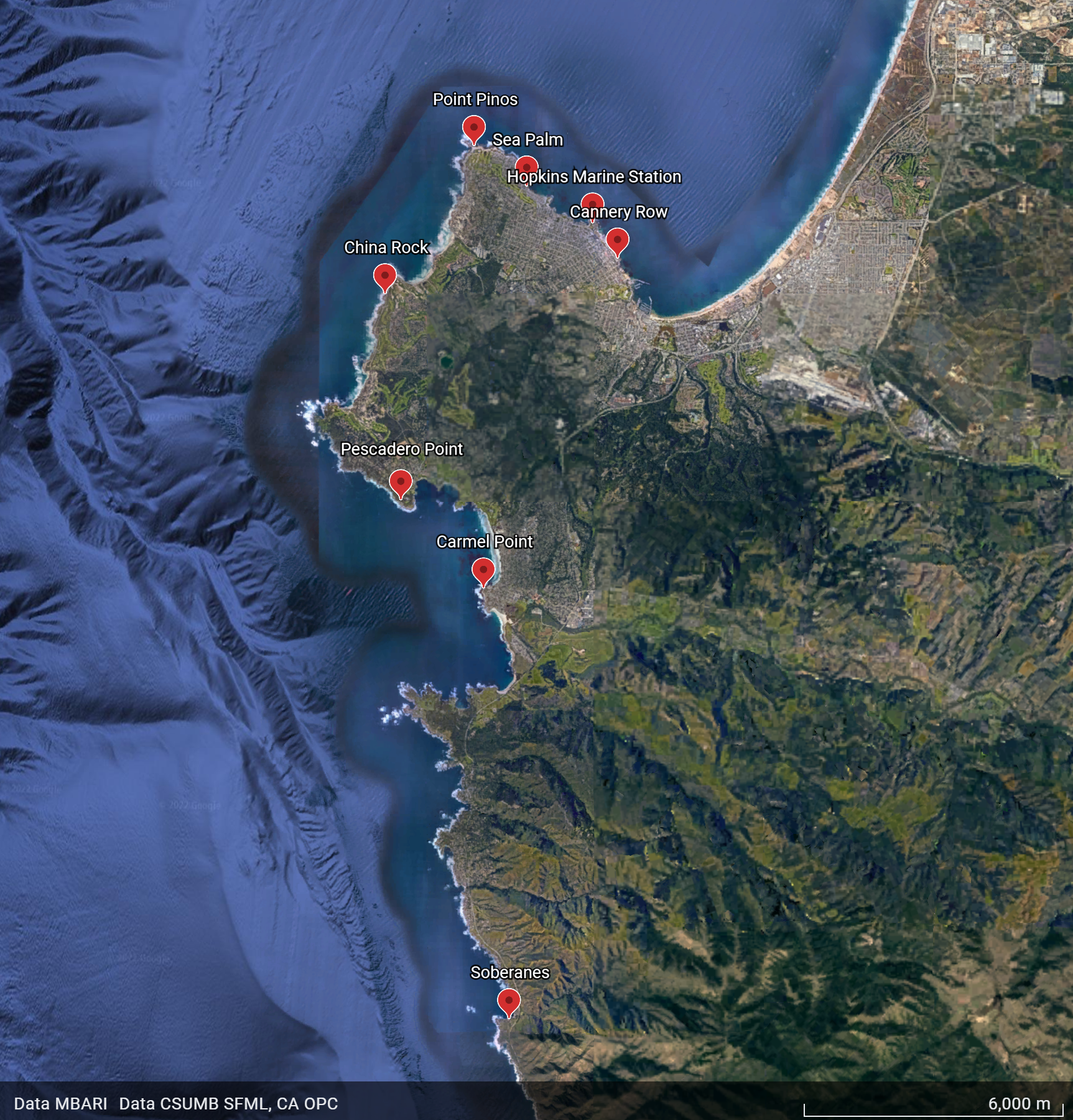
Every other week during low tide, we were out in the rocky intertidal each morning at 5 am recording data on sea urchins, sea stars, abalone, and algal cover. As part of the Haupt Lab, we went to eight sites around the Monterey Peninsula, and it was fascinating to see the diversity of intertidals and invertebrate populations! We also collected and dissected a minimum of approximately 30 urchins from each site to understand how urchin reproductive capacity varied around the peninsula.
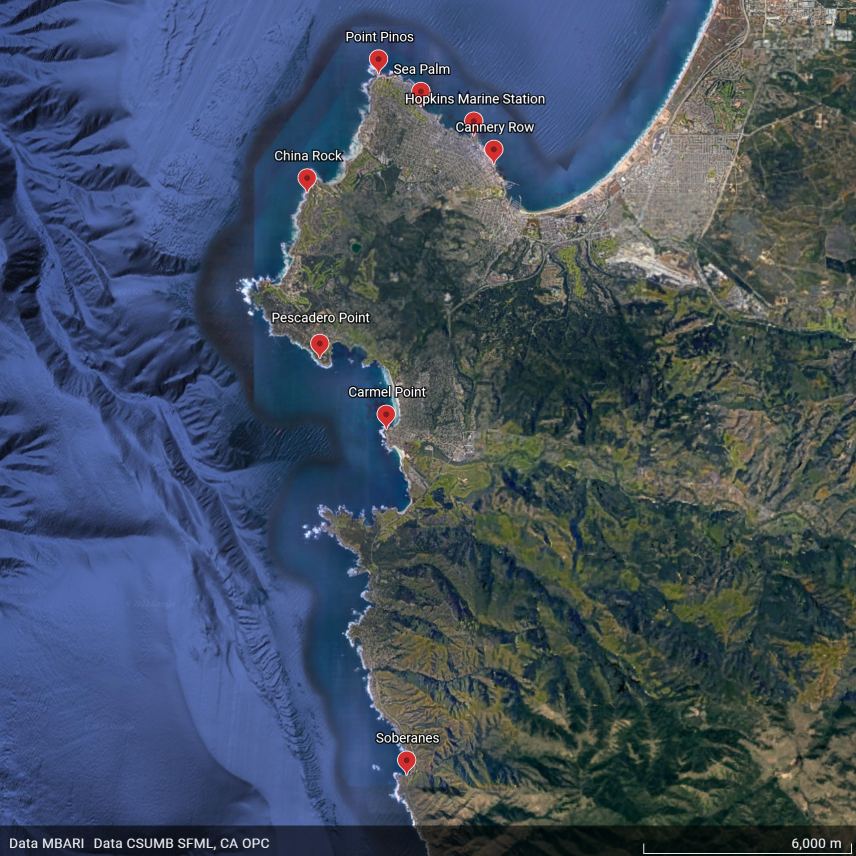
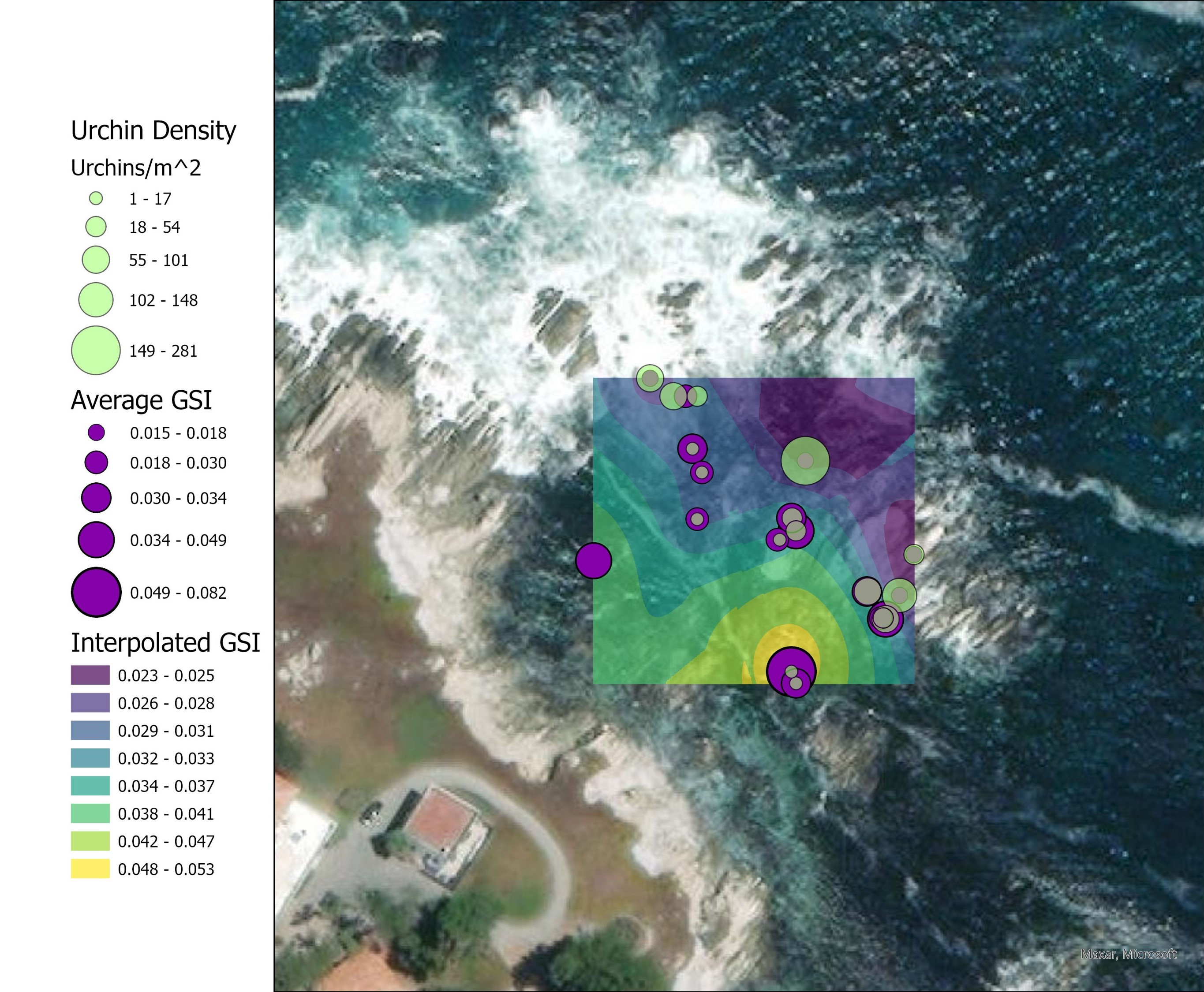
My research project aimed to determine how purple sea urchin (Strongylocentrotus purpuratus) reproductive capacity varies across the intertidal of one site, Hopkins Marine Station, and how various biotic (living) and abiotic (non-living) factors drive this variation. Specifically, I focused on these four factors:
- Urchin density, or the number of urchins within a 1x1 meter quadrat.
- Algal cover, or the percentage of nutritious algae (the primary food source for urchins) within the quadrat.
- Substrate type, or the size of the rocks (where urchins live and hide) within the quadrat.
- Distance from the nearby kelp forest, which also provides food for the urchins in the form of drift kelp.
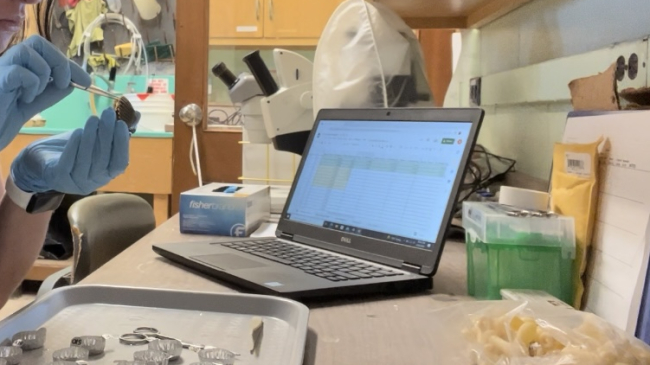
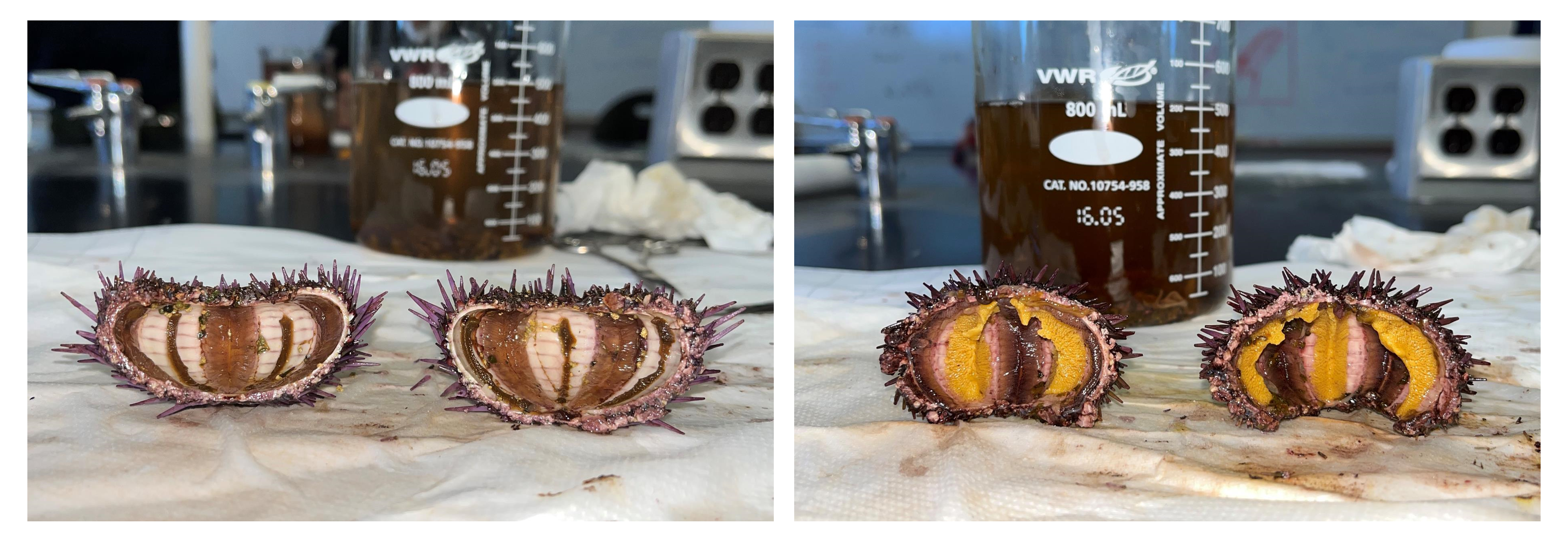
We assessed the reproductive capacity of the urchins by determining their gonadosomatic index (GSI), or the percent of the urchin’s total body mass made up of reproductive organs. This was done by weighing the urchins, dissecting them, removing their gonads, and weighing the gonads. For my project, we dissected 85 urchins from Hopkins Marine Station (instead of the usual 30) to collect a more representative sample of small-scale variation across the entire site.
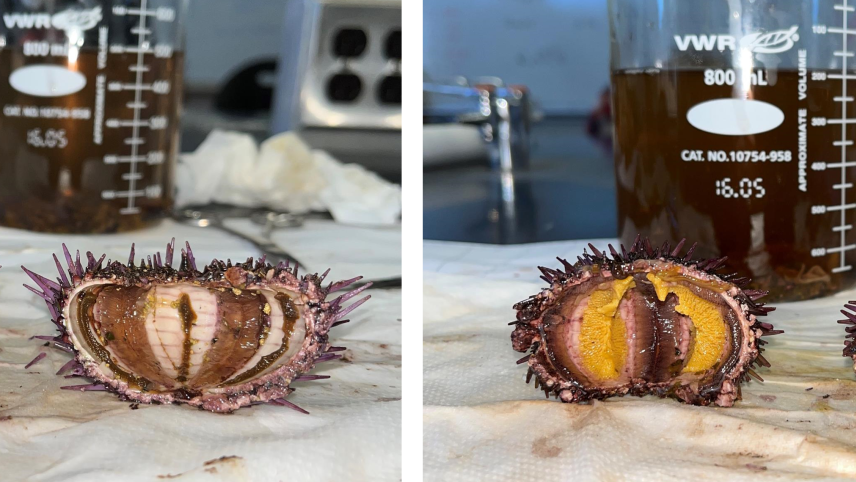
We found widespread variation of urchin GSI across Hopkins. Algal cover had the most significant relationship to GSI, while urchin density, substrate type, and distance from kelp forest all had little to no significant impact. However, all of these variables only account for a small portion of variation in urchin reproductive capacity. Further investigation is required to determine additional drivers of site-wide variation.
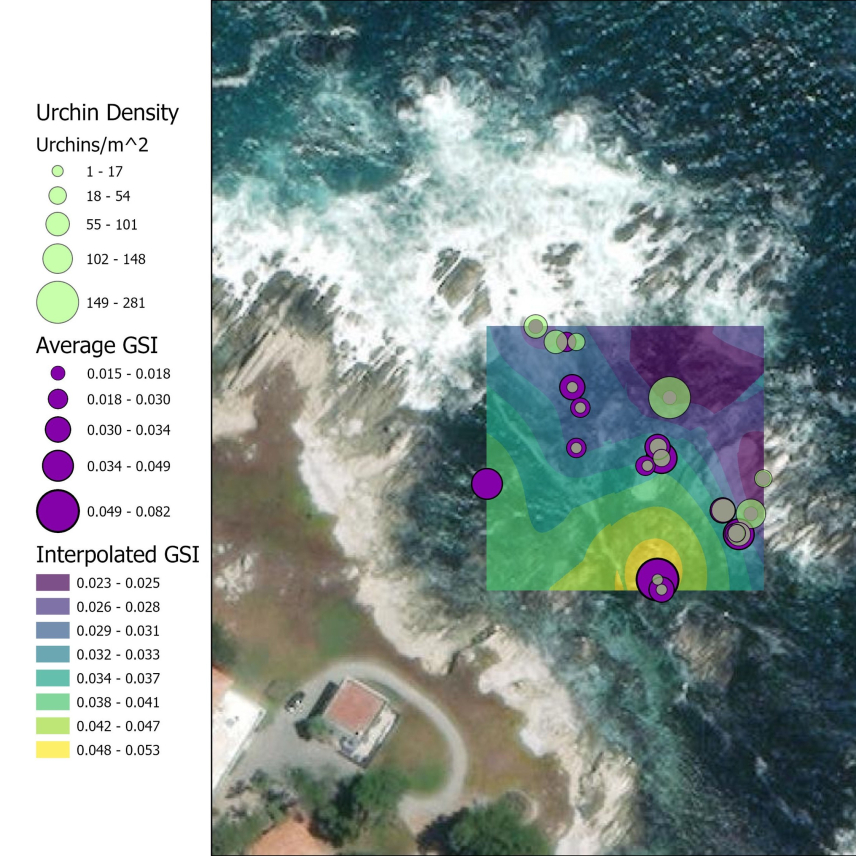
The information from this research will help future scientists to better understand how urchin reproduction varies spatially in the intertidal as well as inform kelp forest restoration and urchin population control efforts in light of recent central California kelp forest declines!
The Hollings Program has been an incredible opportunity, and I encourage any interested sophomores to apply!
Sofia Gluskin is a 2021 Hollings scholar an ecology, evolution, and behavior major at the University of South Florida.