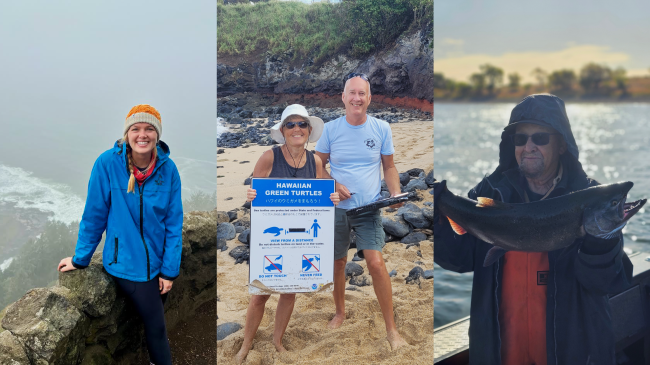

Hi! I’m Mia Gomez, a 2023 NOAA Hollings scholar studying marine biology with a minor in law at Florida Atlantic University Harriet L. Wilkes Honors College in Jupiter, Florida. This past summer, I had the amazing opportunity to evaluate coral reef cover during my internship at NOAA’s National Centers for Coastal Ocean Science (NCCOS) Beaufort Laboratory in Beaufort, North Carolina.
My summer research project focused on evaluating the effects of a marine heat wave on coral colonies at a Cheeca Rocks reef plot in the Florida Keys National Marine Sanctuary (FKNMS). Cheeca Rocks reef is monitored under the FKNMS’s restoration effort, called Mission: Iconic Reefs offsite link. This marine heat wave, which occurred from June to September of 2023, was of particular interest because it caused severe bleaching of the Florida Keys Marine Tract and occurred during the fourth known global bleaching event.
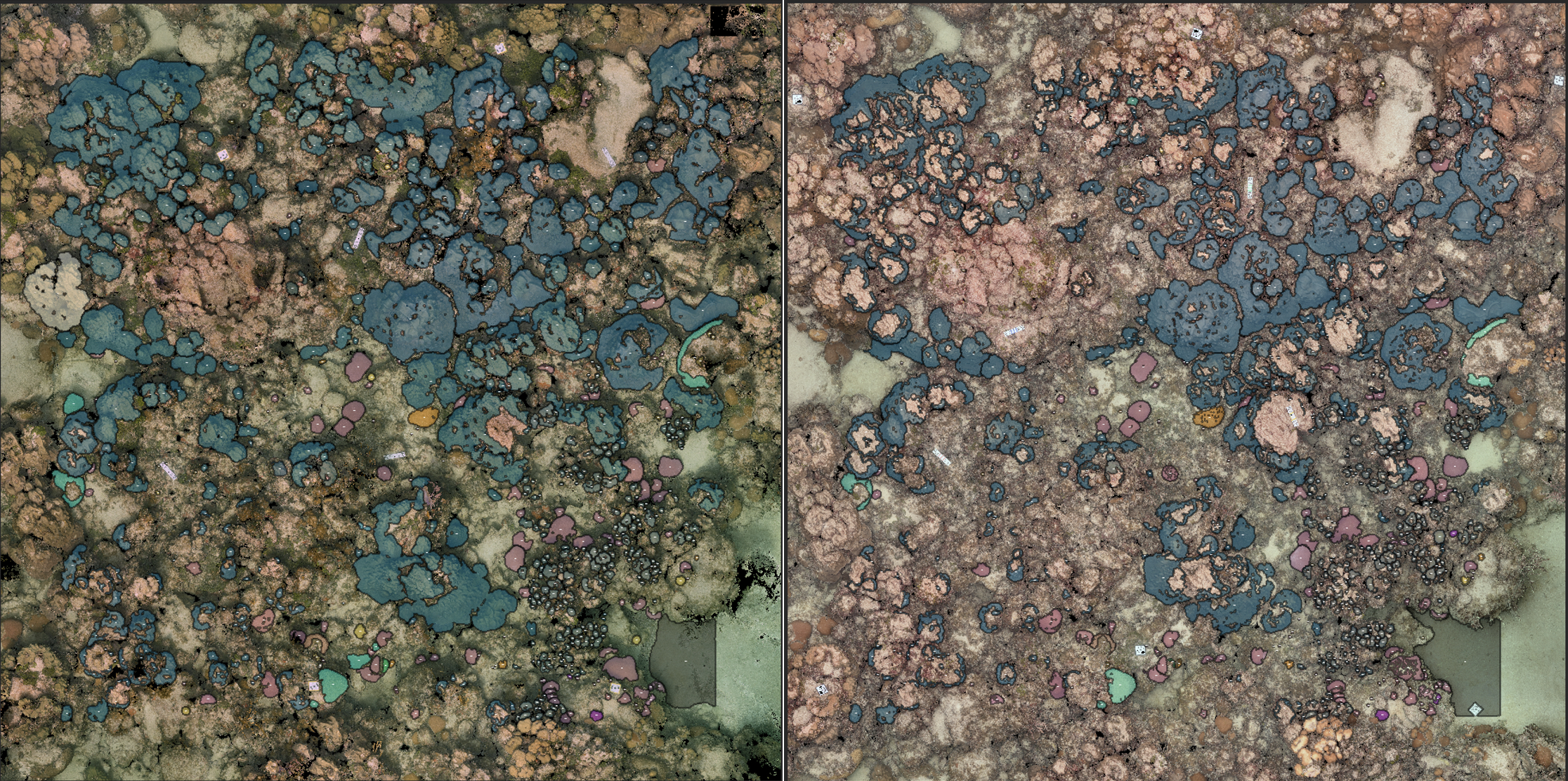
I evaluated coral resilience and reef condition by analyzing changes in the benthic community before and after the bleaching event. I found that the Cheeca Rocks reef plot had less coral cover, more macroalgae present, and increased coral mortality from June 2022 (pre-bleaching) to May 2024 (post-bleaching).
Evaluating coral colonies
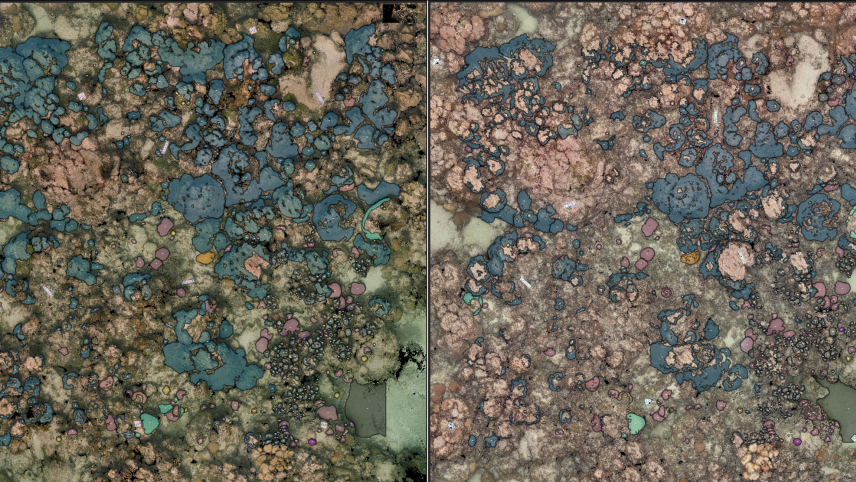
For this project, my mentor, Dr. Shay Viehman, and her team taught me large-scale imagery analysis and coral identification techniques. I analyzed high-resolution composite imagery, referred to as orthophotomosaics, of a fixed 10-meter by 10-meter Cheeca Rocks monitoring plot that had high coral cover. I compared orthophotomosaics for two dates: June 2022 and May 2024. I used TagLab software to annotate coral colonies, and my newfound knowledge of coral identification was used to label colony species in this orthophotomosaic imagery. I found that there was a change in the abundance of coral species present (coral diversity), quantified the space each coral colony took up on the reef (% coral cover), and noted the changed diversity of the marine community (community cover) in the plot from 2022 to 2024.
Learning about NOAA science and careers
Throughout this internship, I learned about the Mission: Iconic Reefs restoration effort and the incredible work that goes into planning, restoring, and monitoring coral reefs in the Florida Keys.
Furthermore, while at the Beaufort Lab, I met a variety of scientists and learned about their current projects and career paths at NOAA. There is an expansive variety of work being done at the lab, including research on sea turtles, salt marshes, oysters, data visualization, fisheries management, habitat protection, bathymetric mapping, dolphin photo-identification, estuaries, and coral restoration.
I’m so grateful to have had this experience and truly appreciate the opportunity I had this summer to learn about the important role of coral imagery in restoration efforts and the diversity of careers at NOAA.
My internship showed me the teamwork and dedication that goes into science. I gained perspective on the collaboration between national efforts at the research, monitoring, restoration, and management levels to contribute to global restoration efforts and evaluate the resilience of coral reefs to climate stressors.
Mia Gomez, 2023 Hollings scholar
Mia is a 2023 Hollings scholar studying marine biology with a minor in law at Florida Atlantic University Harriet L. Wilkes Honors College.