
February 2025 saw near-average temperatures, precipitation
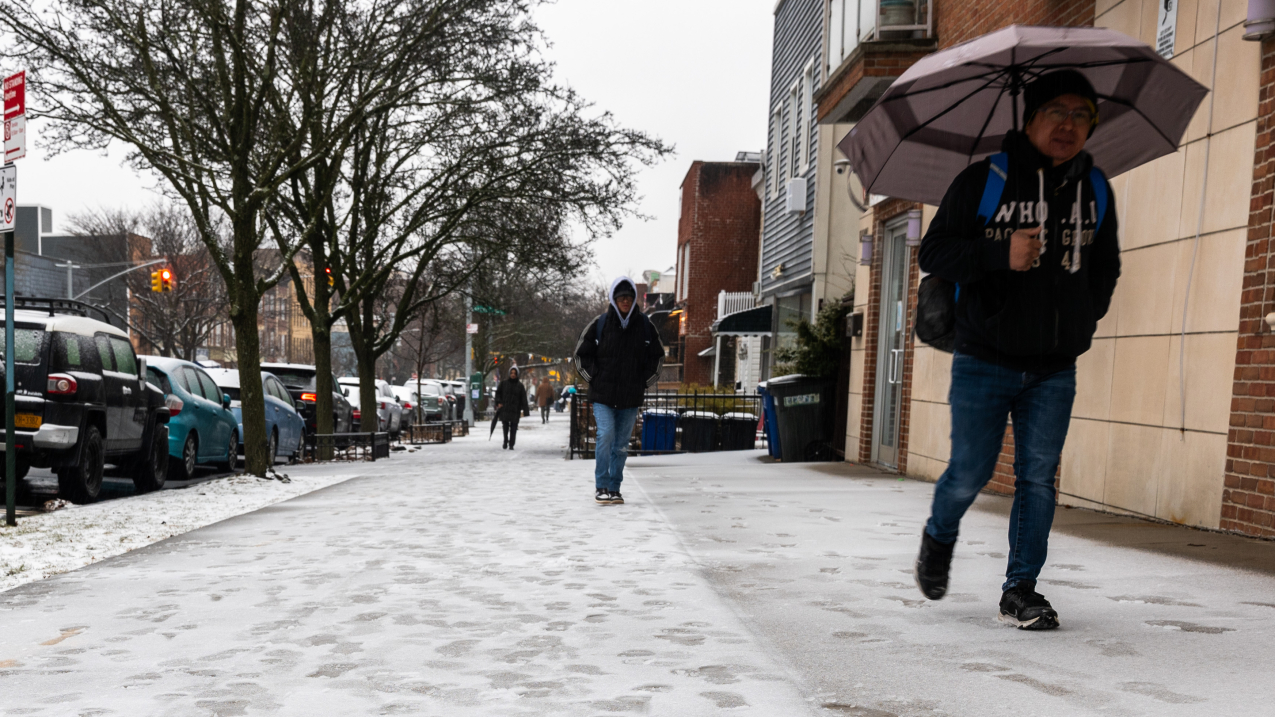
FEBRUARY 6, 2025: People walk through light morning snow in Brooklyn, New York. Despite Arctic air outbreaks and snow in January and February, the U.S. had a relatively warm and dry meteorological winter. (Image credit: Getty Images)
A near-average February wrapped up a relatively warm and dry winter for the U.S., according to experts from NOAA’s National Centers for Environmental Information (NCEI).
Below are highlights from NOAA’s February 2025 U.S. climate report:
Climate by the numbers
Meteorological winter (December 2024 – February 2025)
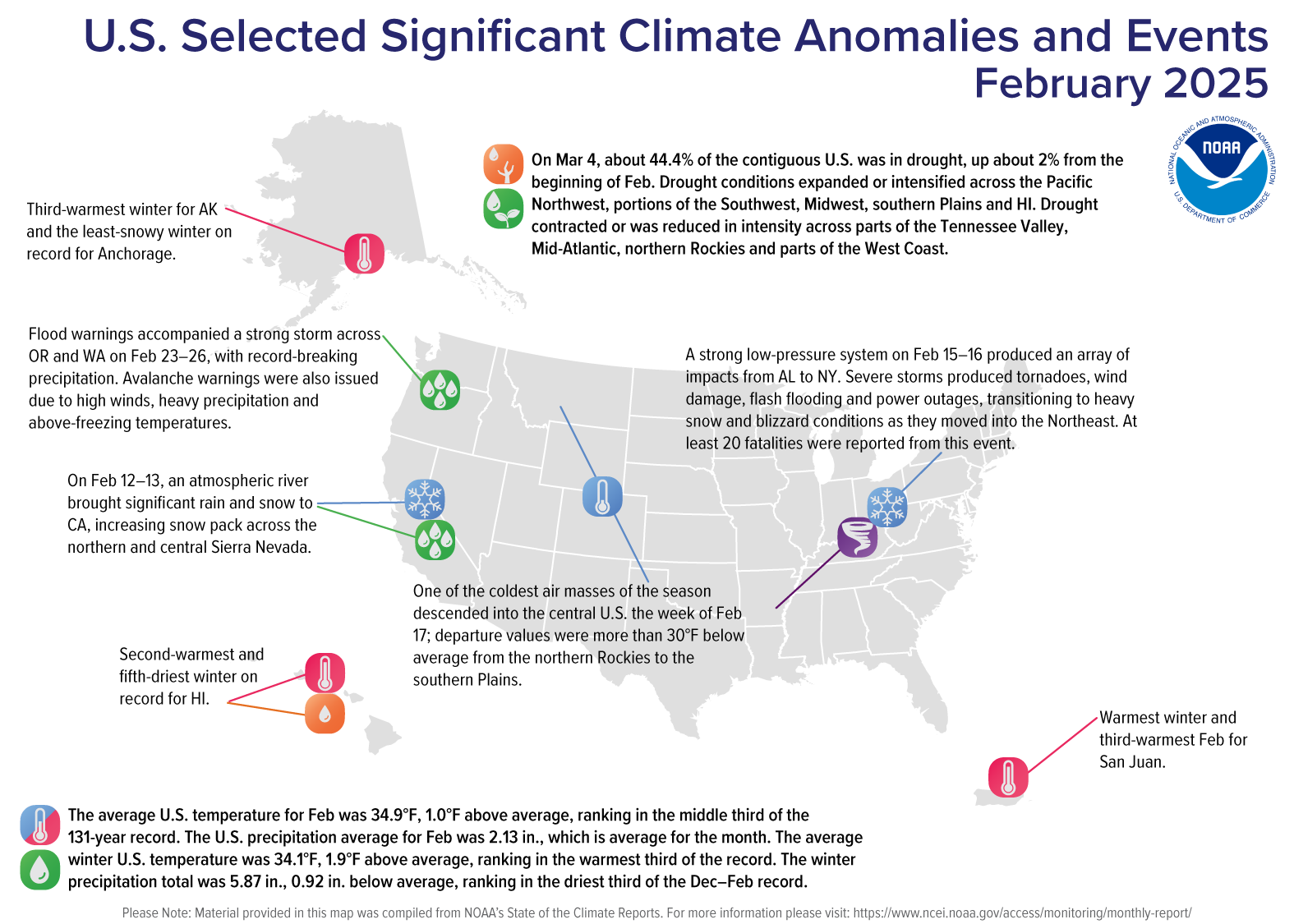
Meteorological winter across the contiguous U.S. had an average temperature of 34.1 degrees F — 1.9 degrees above average — ranking in the warmest third of NOAA’s historical record.
Total winter precipitation was 5.87 inches, 0.92 of an inch below average, ranking in the driest third of the December–February climate record.
February 2025
The average temperature across the contiguous U.S. last month was 34.9 degrees F, 1.0 degree above the 20th-century average, ranked in the middle third of the climate record. February temperatures were generally above average across much of the Southwest, Gulf Coast and Southeast, and cooler-than-average from the Pacific Northwest to the northern and central Plains. Arizona had its second-warmest February on record.
February precipitation for the Lower 48 was 2.13 inches, which is average for the month. Precipitation was above average across much of the Northwest, as well as from the central Mississippi Valley to the East Coast and into parts of the Northeast. Drier-than-normal conditions were found across parts of the Southwest, Deep South to the Great Lakes and northern Plains, and in portions of the Southeast.
Other notable climate events
Drought coverage increased slightly: According to the March 4 U.S. Drought Monitor report offsite link, about 44.4% of the contiguous U.S. was in drought, up about 2% from the beginning of February. Drought conditions expanded or intensified across the Pacific Northwest, portions of the Southwest, Midwest, southern Plains and Hawaii. Drought lessened in coverage or intensity across parts of the Tennessee Valley, Mid-Atlantic, Northern Rockies and parts of the West Coast.
Both Alaska and Hawaii had a warm winter: The average winter temperature for Alaska was 13.6 degrees F — 10.0 degrees above average — ranking as the third-warmest meteorological winter in the state’s 101-year record. Hawaii had a winter temperature of 64.9 degrees F, 1.2 degrees above average, ranking as the state’s second-warmest meteorological winter on record.
More > Access NOAA’s latest climate report and download the images.