
Spring into science
NOAA Education


Official websites use .gov
A .gov website belongs to an official government organization in the United States.

Secure .gov websites use HTTPS
A lock () or https:// means you’ve safely connected to the .gov website. Share sensitive information only on official, secure websites.
When it’s spring in the Northern Hemisphere, NOAA is here to celebrate! From articles to graphics to educational resources, S-P-R-I-N-G into science with us!

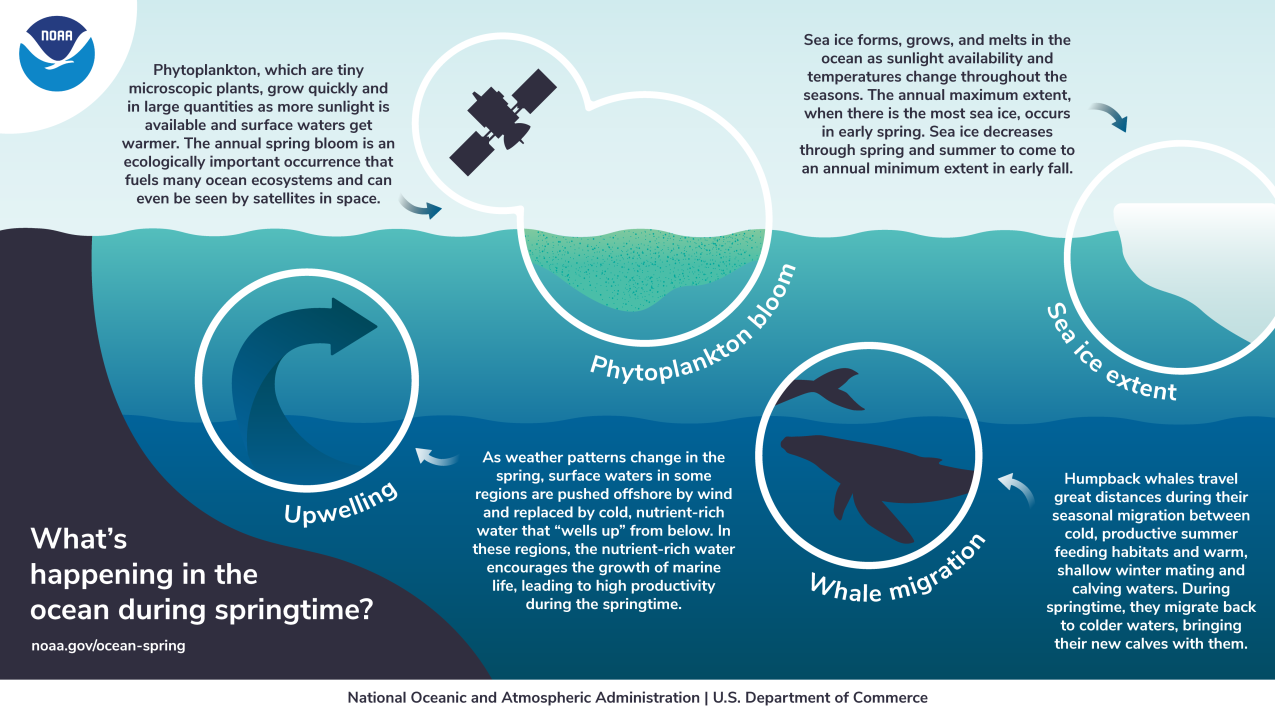
From whale migration to phytoplankton blooms, how can you tell if spring has sprung in the sea?
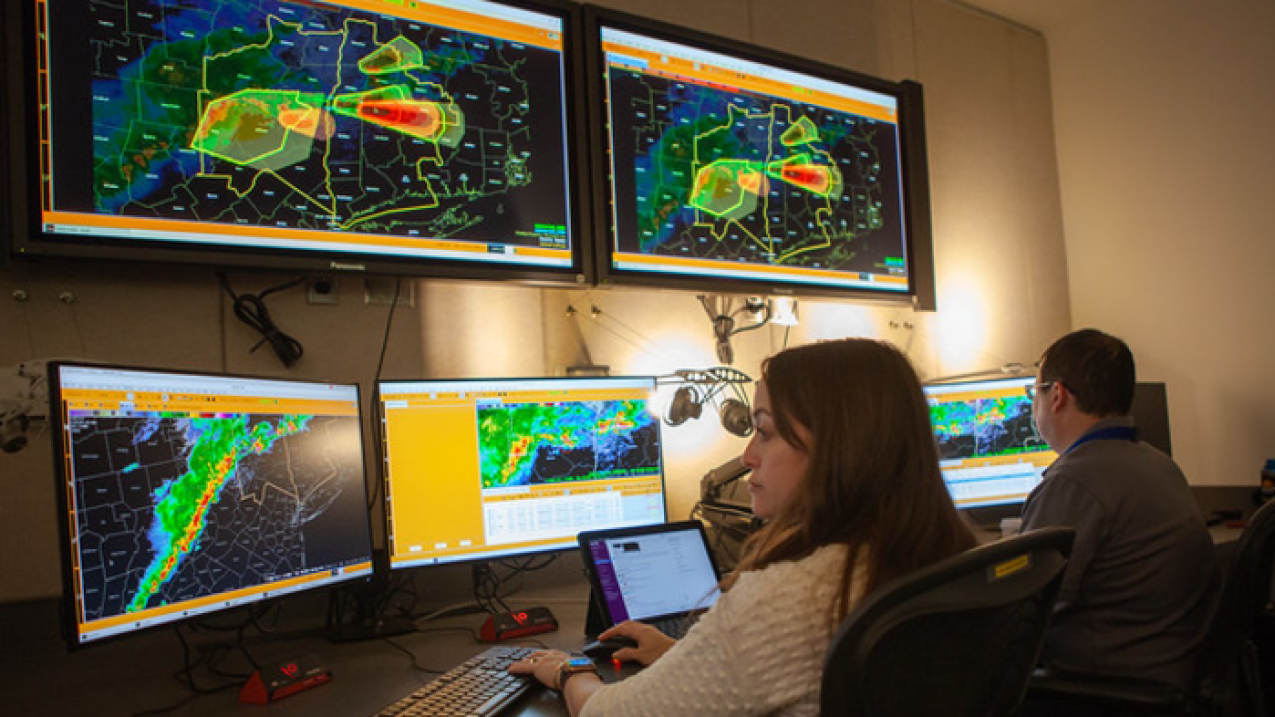
The NOAA Hazardous Weather Testbed fosters collaboration for researchers and NWS forecasters to test and evaluate emerging technologies and science.

March 1 marks the start of meteorological spring, but astronomical spring doesn't start until March 20. What’s the difference between the two?
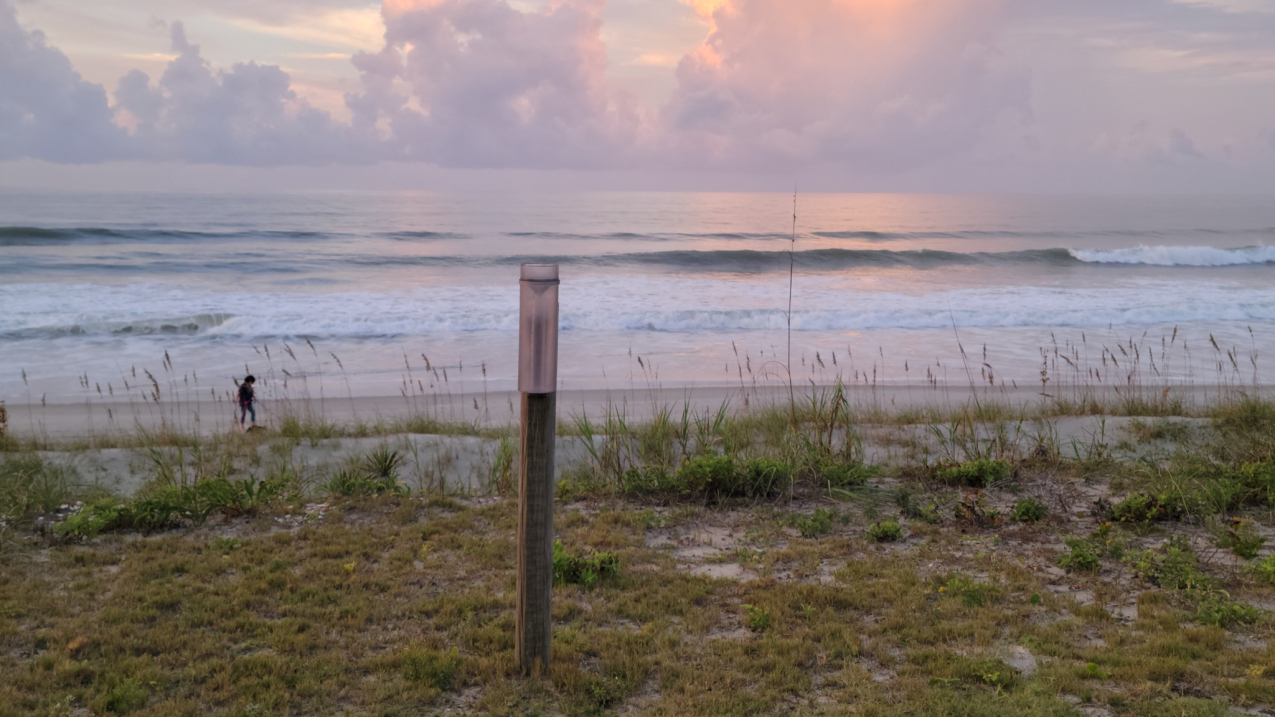
Take part in a friendly competition to see which state can recruit the most new citizen scientists to record precipitation.
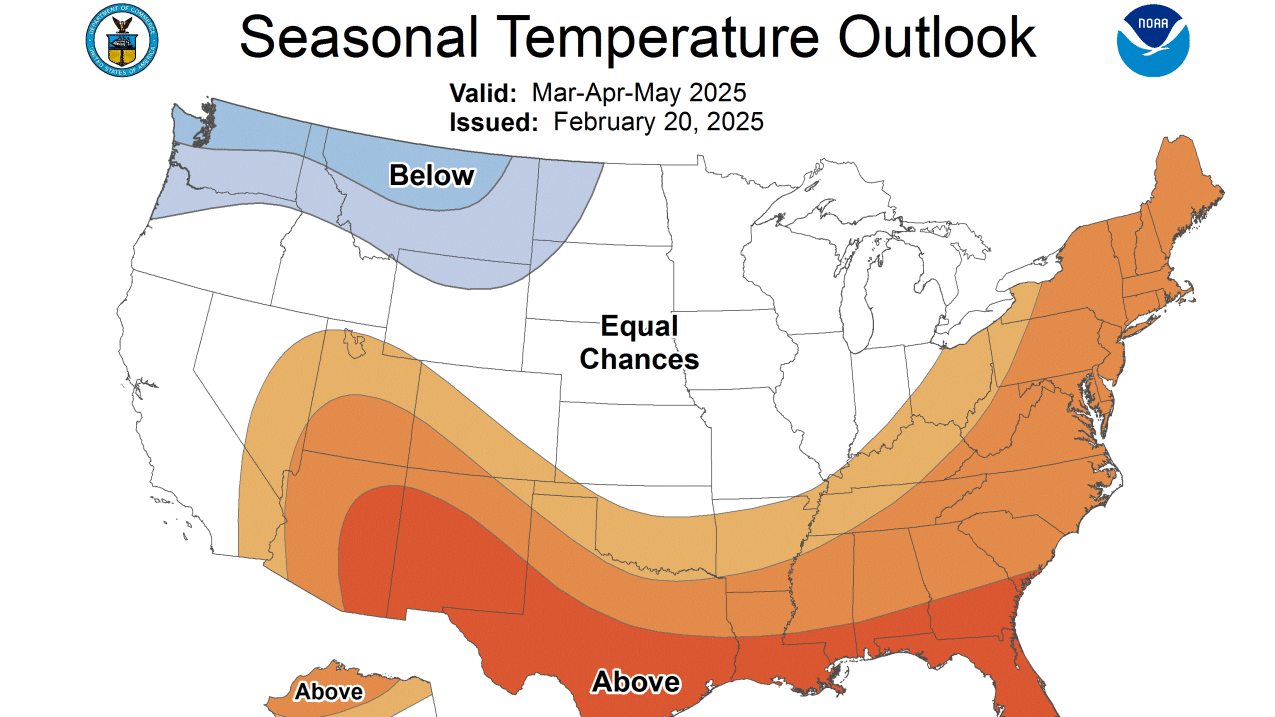
Check out the seasonal temperature and precipitation outlooks for the U.S. through March, April, and May.
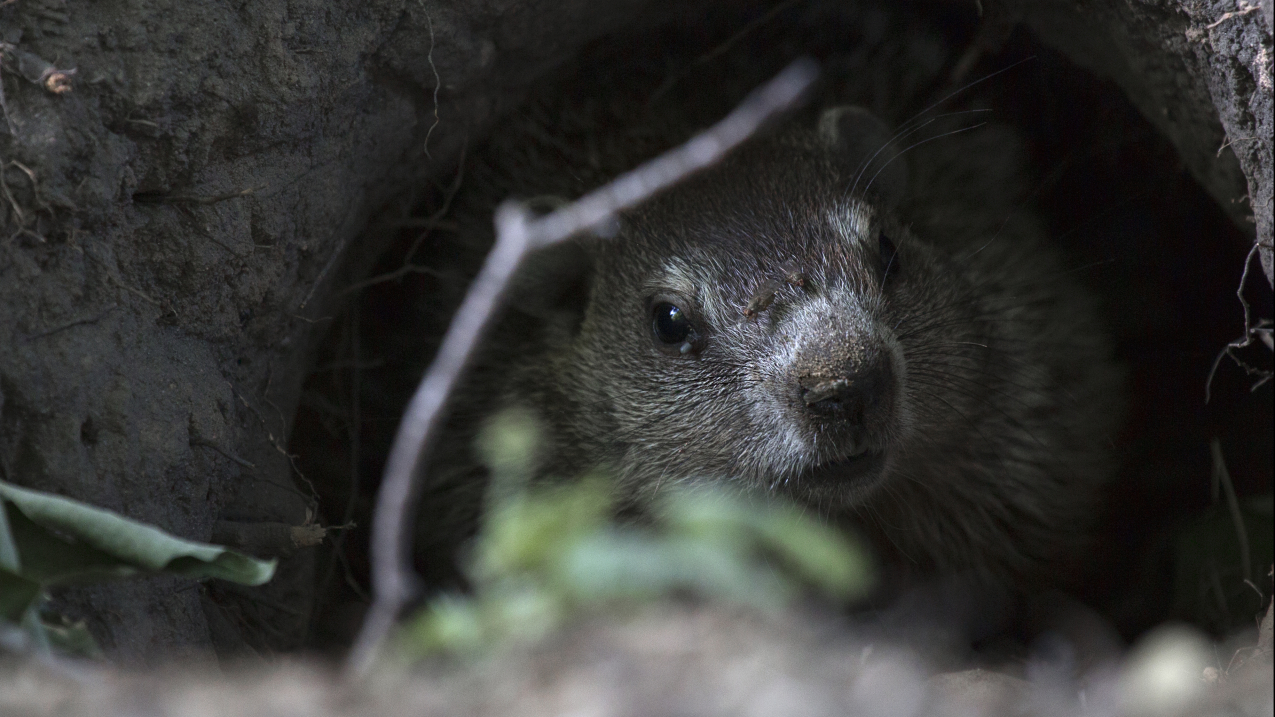
Will it be a “long and lustrous winter,” as Phil Connors, the main character in the 1993 movie Groundhog Day said? Or will spring make an early appearance?
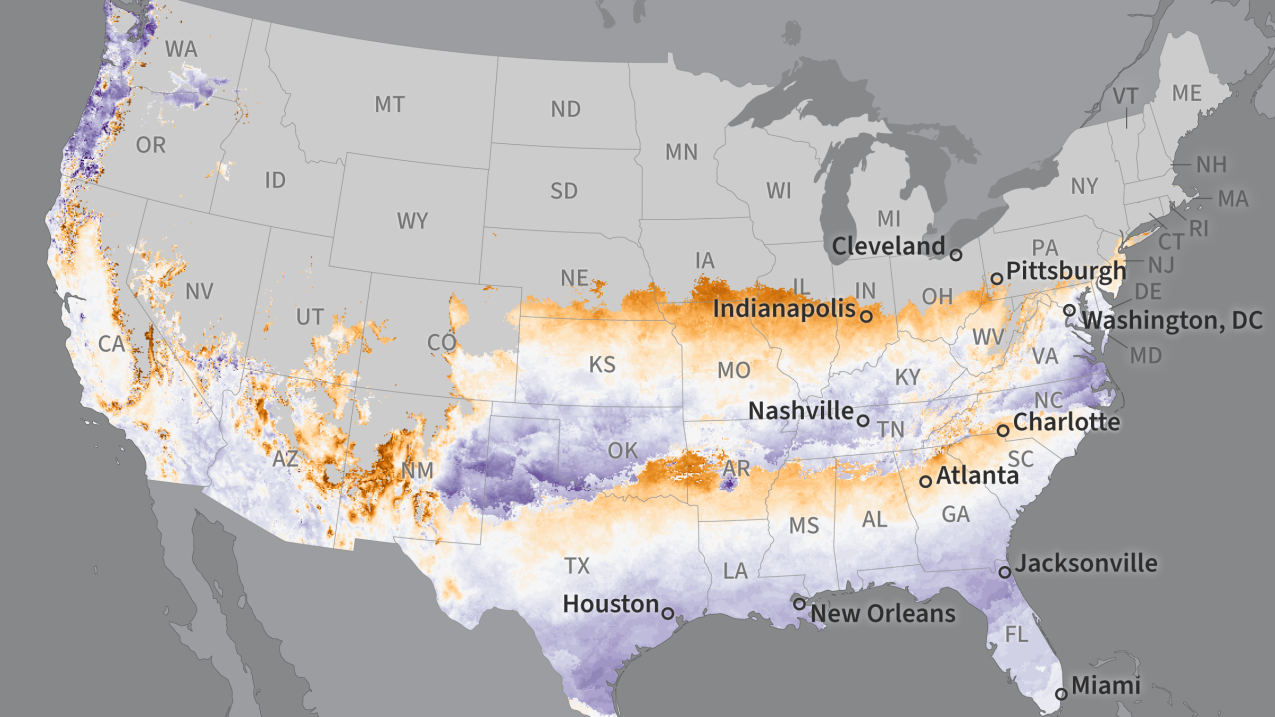
While the first day of spring arrives on March 20, many places across the United States see their first signs of the season much sooner.

In honor of Groundhog Day and in the spirit of fun, we pitted groundhogs from all over the United States against each other — and data from NOAA's National Centers for Environmental Information — to see who’s the most accurate.
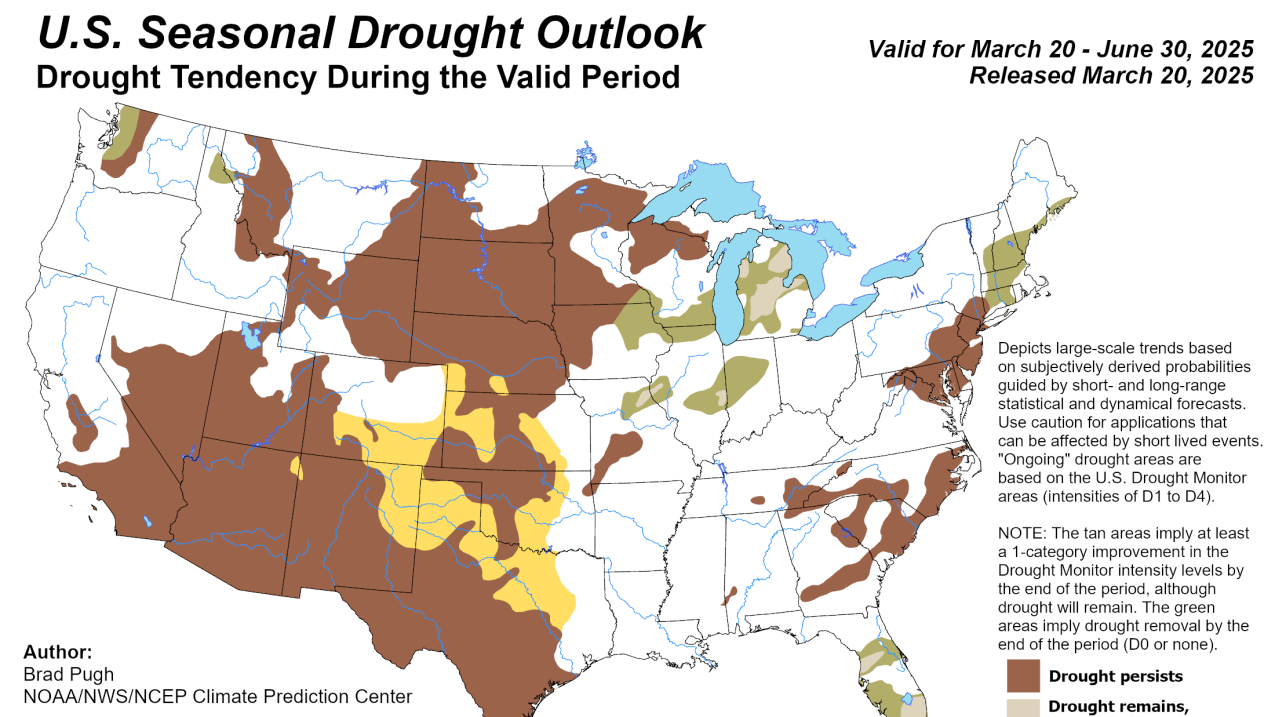
Drought to develop or persist for Rocky Mountains, Southwest and southern Plains.
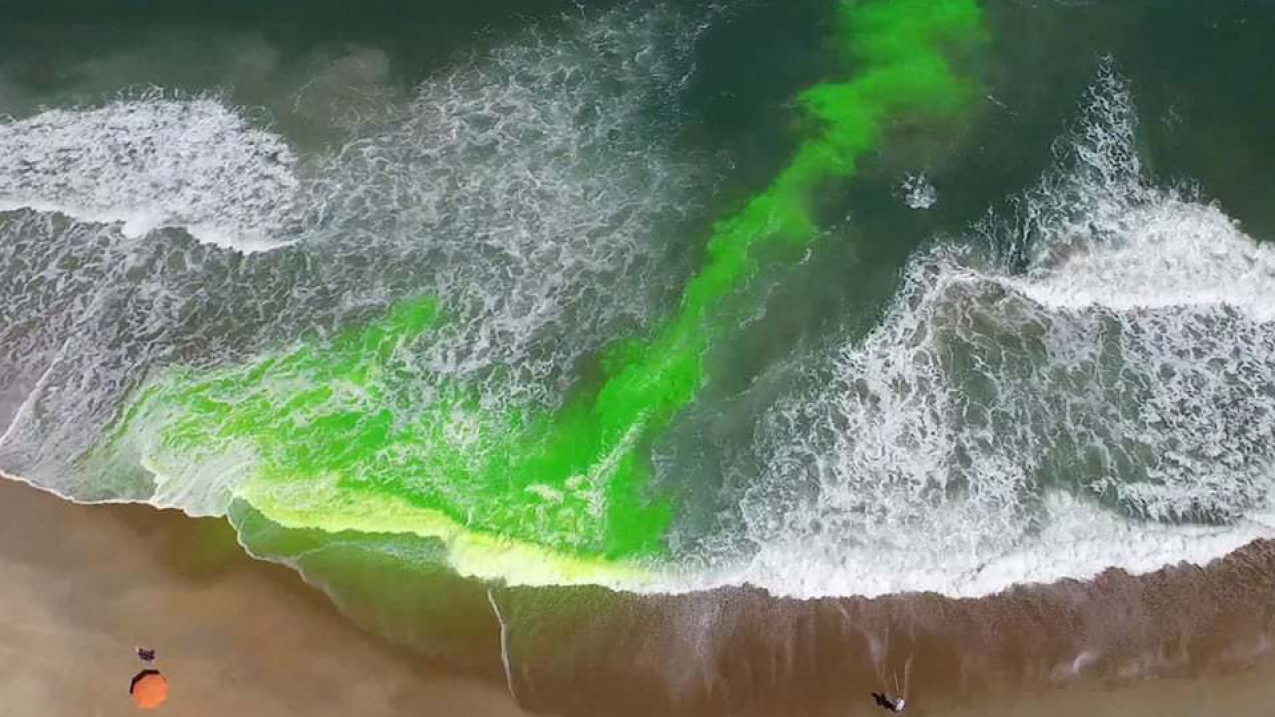
Get ready for the change of seasons with safety tips, videos and infographics.
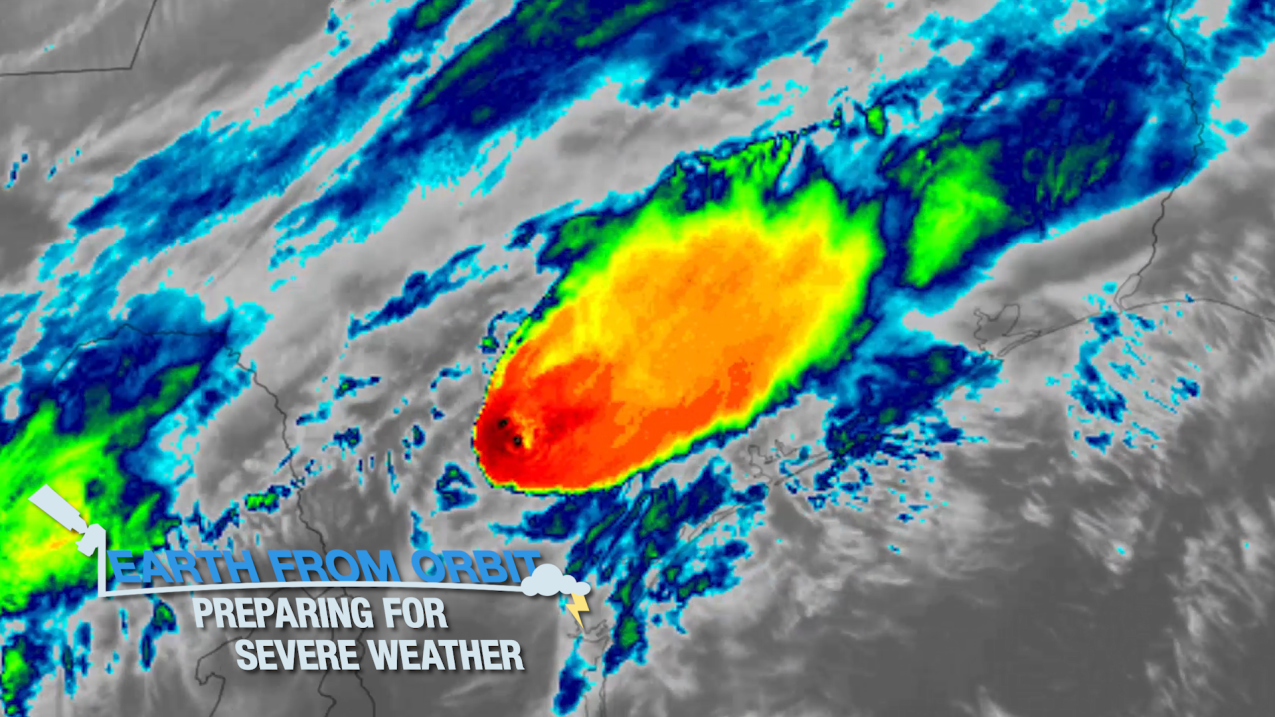
NOAA’s geostationary and polar-orbiting satellites monitor the changing weather patterns that come with the transition from winter to spring.
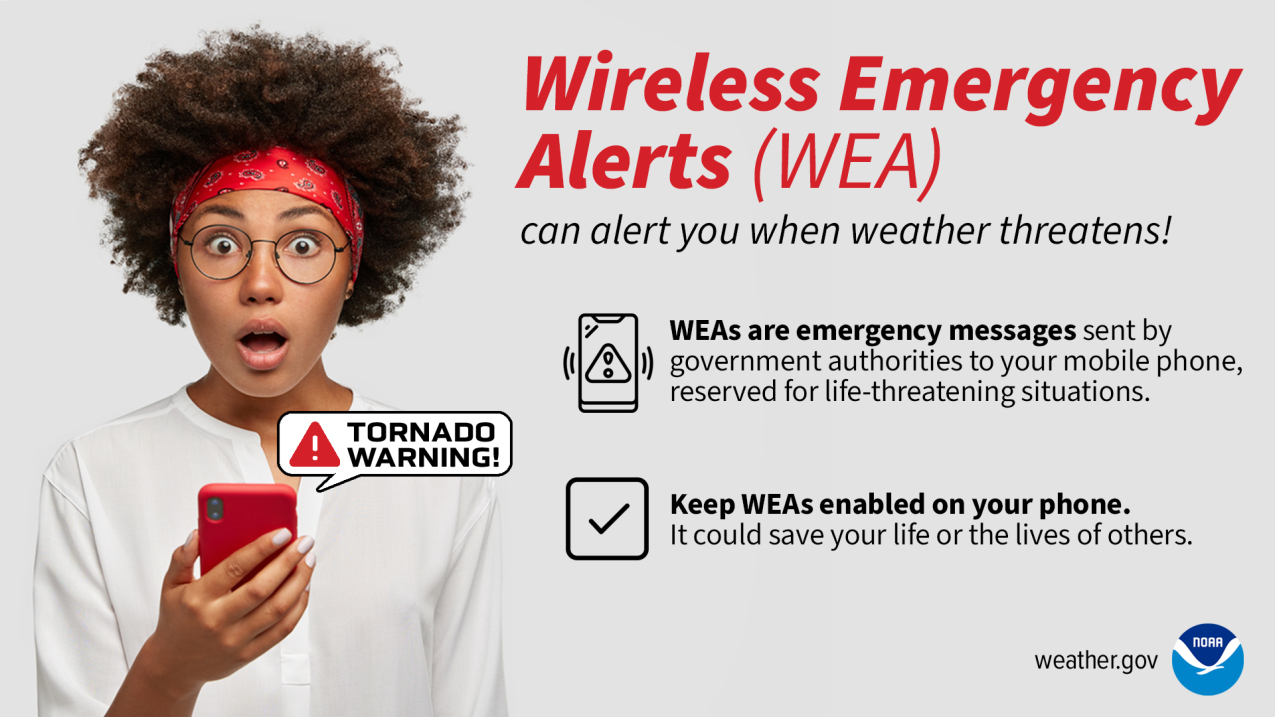
Are you #WeatherReady for Spring? Check out the latest weather safety graphics, videos, social media posts, and more from the National Weather Service.
As a volunteer storm spotter, you can help keep your local community safe by providing timely and accurate reports of severe weather to the National Weather Service. Consider signing up today!
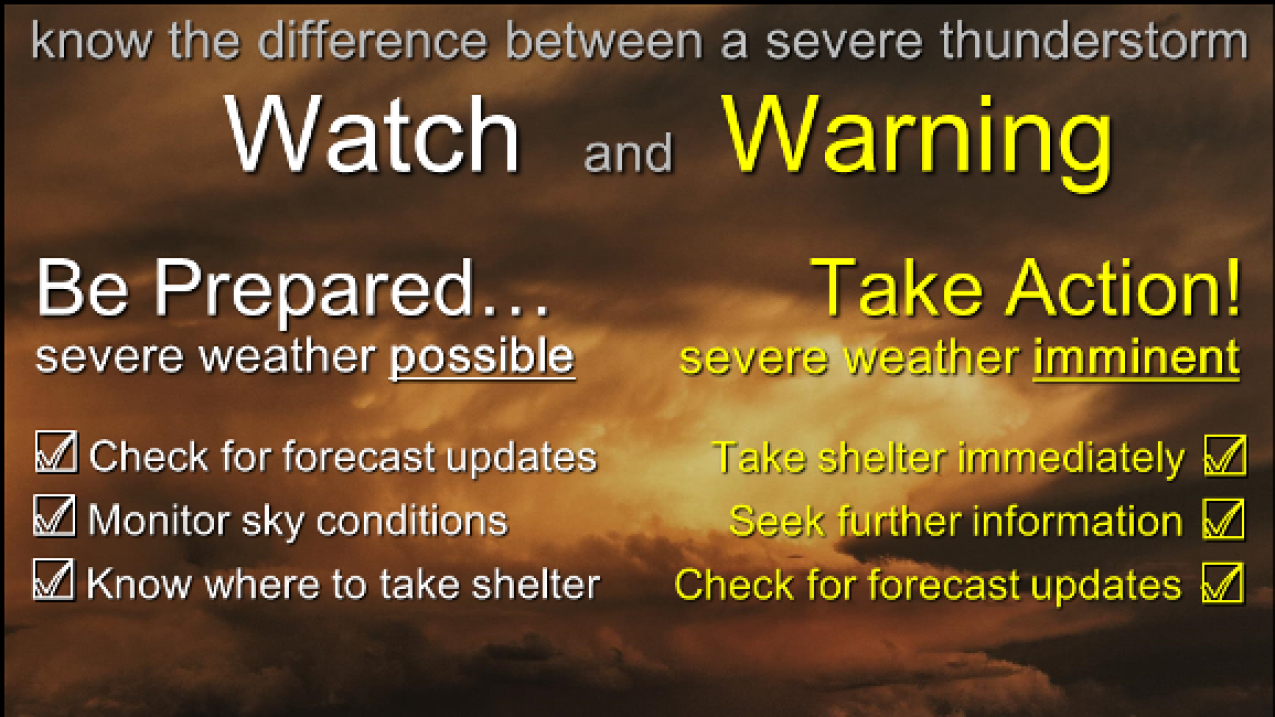
What's a severe thunderstorm or tornado watch, and how is it different from a warning?
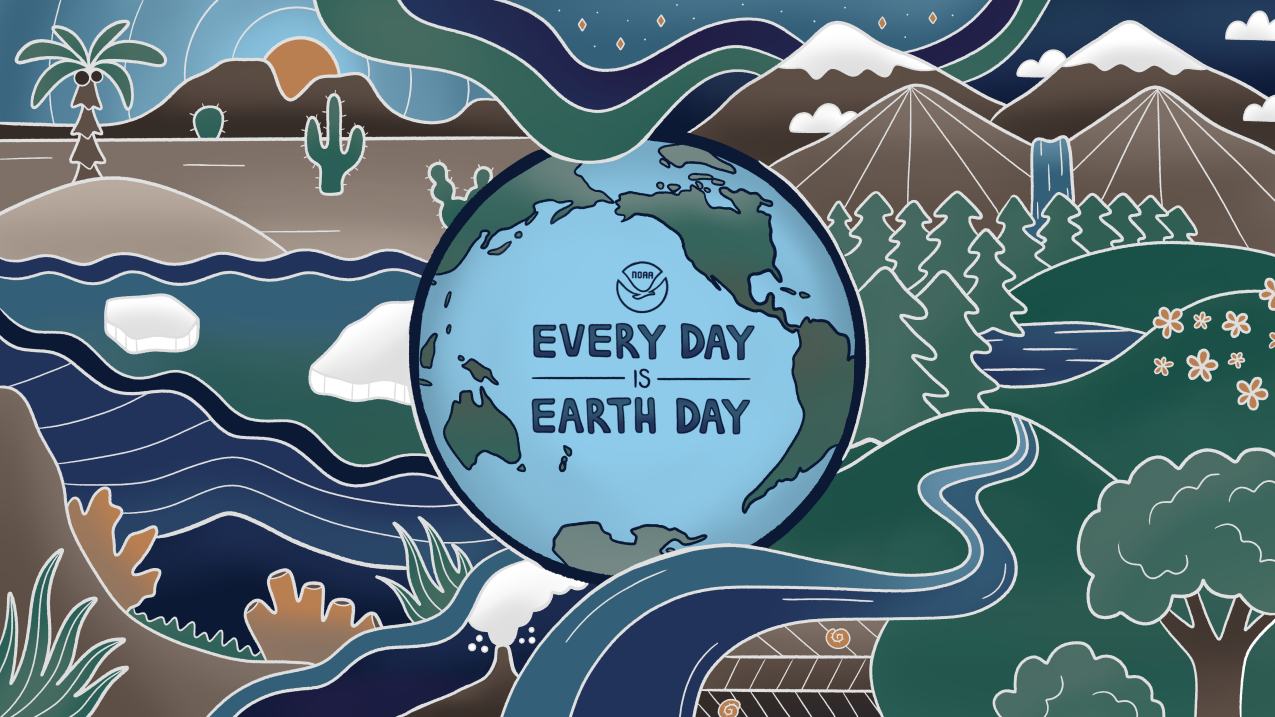
How is NOAA addressing climate change, extreme weather, pollution and more? And how can you make a difference? Explore our Earth Day portal to find out!
We love the ocean and we know you do too. Join Symone Johnson as she gives us a ninety second tour of our Earth Day collection.
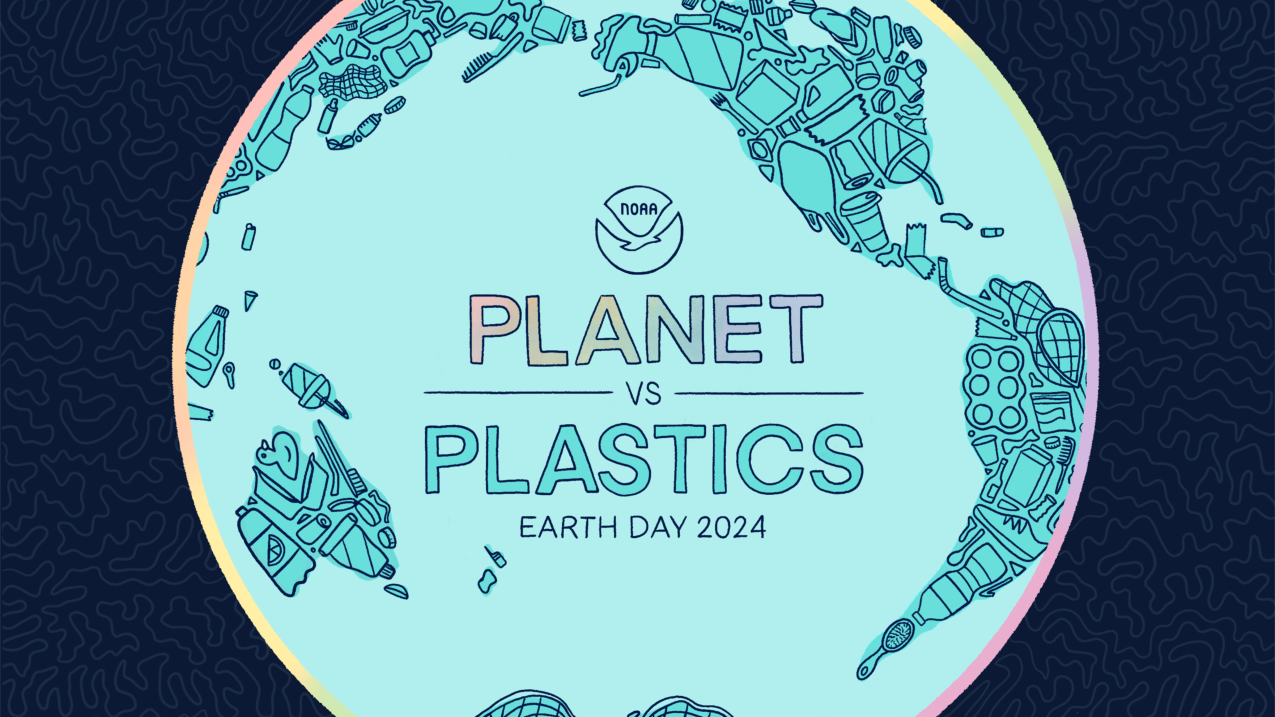
Show your love for the planet with coloring pages, posters, and graphics for Earth Day.