  • Home
  • Weather
  • Climate
  • Ocean & Coasts
  • Fisheries
  • Satellites
  • Research
  • Marine & Aviation
  • Charting
  • Sanctuaries
  • Education
  • News and features
  • Tools & resources
  • About our agency
U.S. flag

An official website of the United States government

Here’s how you know

Dot gov

Official websites use .gov
A .gov website belongs to an official government organization in the United States.

HTTPS

Secure .gov websites use HTTPS
A lock (LockA locked padlock) or https:// means you’ve safely connected to the .gov website. Share sensitive information only on official, secure websites.

Find your local weather
Change location:
  • News
  • Tools
  • About
 
 
NOAA mobile logo
NOAA logo National Oceanic and Atmospheric Administration U.S. Department of Commerce


Breadcrumb

  1. Home
  2. Climate
  • Climate home
  • Climate 101
  • Collaborations and partnerships
  • Funding opportunities
  • Tools and resources
  • News and stories

Climate news and stories

Share:
Share to Twitter Share to Facebook Share by email Print
Climate.gov news and features
Drought.gov news
Heat.gov news and events
NOAA monthly climate call: Thursday, April 20
April 18, 2017
Experts recap March and provide outlooks through July for the U.S.
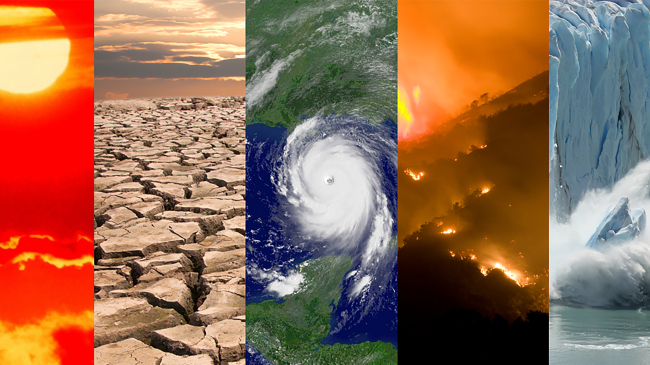
A collage of typical climate and weather-related events: heatwaves, drought, hurricanes, wildfires and changes in sea ice coverage.
Study: Parts of central and Southern California had worst 4-year dry spell in 450 years
April 10, 2017
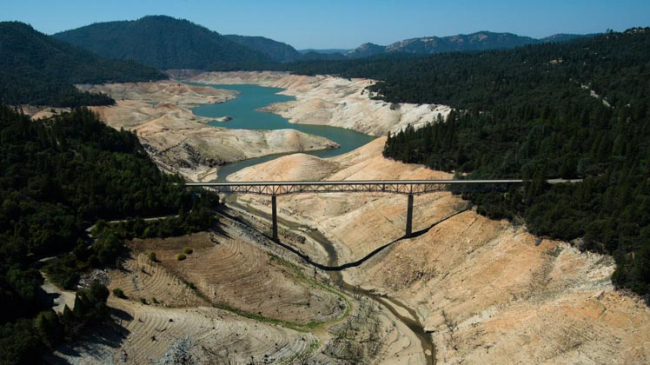
The Enterprise Bridge passes over a section of Lake Oroville that was nearly dry on September 30, 2014, in Oroville, California. Lake Oroville, California's 2nd largest reservoir, was at 49% of average (30% of capacity), the second lowest level on record (behind 1977.) Heavy rains in December 2014 allowed lake levels to recover slightly--as of January 23, 2015 Lake Oroville was at its 7th lowest level of the past 35 years.
U.S. had 2nd warmest year to date and 9th warmest March on record
April 6, 2017
5 billion-dollar disasters in first 3 months of 2017 set new record
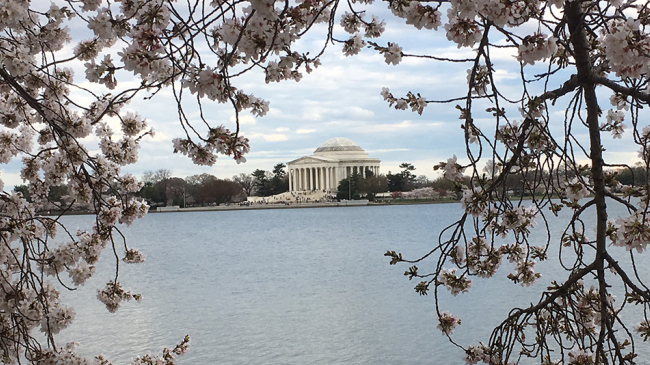
A warmer-than-normal winter in the Mid-Atlantic brought Washington, D.C.'s famed cherry blossoms to the brink of full bloom by mid-March, but then a cold snap hit and froze at least half the blossoms. The remaining Japanese Yoshino cherry blossoms reached peak on March 25, 2017. Pictured here is the Jefferson Memorial across the Tidal Basin, Washington, D.C., March 28, 2017.
A superbloom of wildflowers overtakes California's southeastern deserts
March 28, 2017
Wildflowers blooming in California's Anza Borrego Desert Park, March 12, 2017.
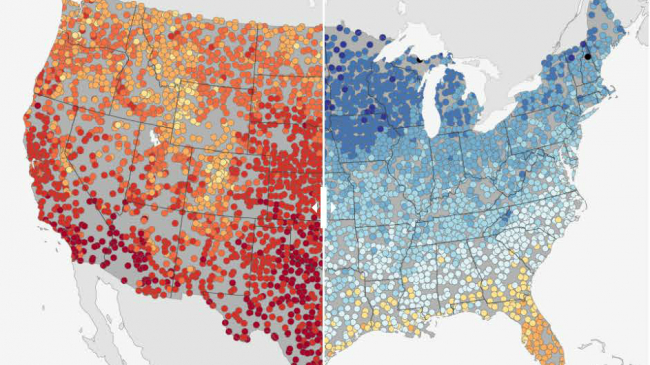
Map: The historical warmest and coldest 1st day of spring for thousands of U.S. locations
March 20, 2017
See the sliding version of this map that shows the warmest (left) and coldest (right) first day of spring (March 20) recorded at thousands of U.S. locations.
Earth had 2nd warmest February, season and year to date on record
March 17, 2017
Arctic and Antarctic sea ice extents were also record-low
A collage of typical climate and weather-related events: heatwaves, drought, hurricanes, wildfires and changes in sea ice coverage.
In the agricultural heartland of the NW Pacific, a water plan protects people and nature
March 8, 2017
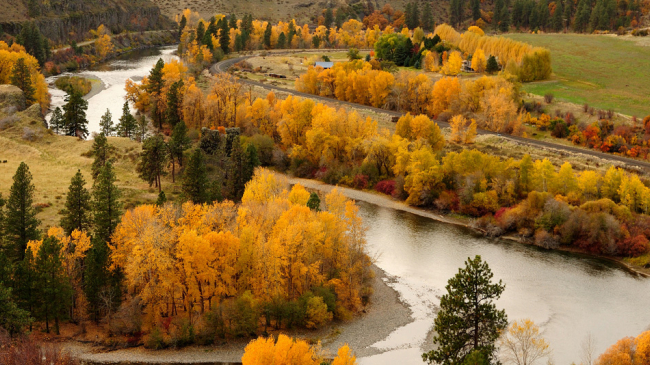
Upper Yakima Canyon near Ellensburg, Washington.
U.S. had 2nd warmest February and 6th warmest winter on record
March 8, 2017
Unseasonable warmth spanned 39 states; Western drought improved
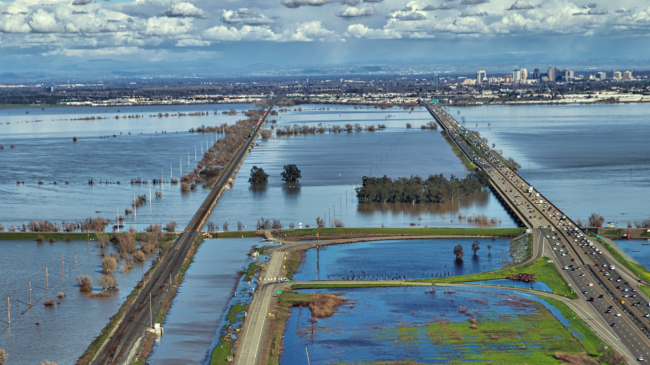
High water spills out of the Yolo flood bypass near Sacramento, February 23, 2017. California had its 2nd wettest winter on record, resulting in extensive flooding in many river valleys and record snowfall in mountain areas.
Late winter 'heatwave' hits the U.S. in February
March 1, 2017
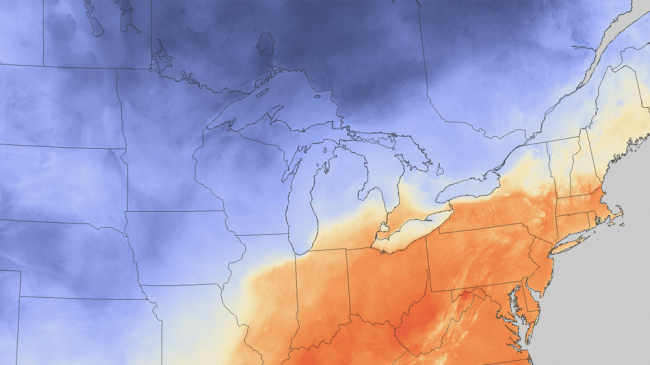
Daytime high temperature on Feb. 24, 2017, based on NOAA RTMA data.
Unprecedented Arctic weather has scientists on edge
February 17, 2017
Sea ice on track for lowest maximum amount on record
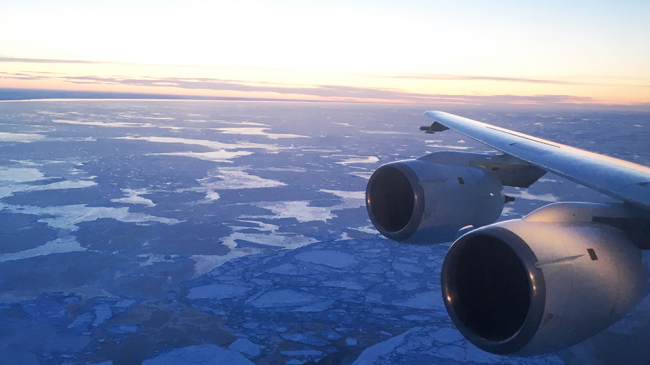
This image, captured from the NASA DC-8 research aircraft on Jan. 29, 2017, shows unconsolidated sea ice off the coast of Barrow AK. Scientists monitoring the Arctic say this year has set records for minimum sea-ice extent during winter.
  • Go to first pageFirst
  • Go to previous pagePrevious
  • …
  • Page 56
  • Page 57
  • Page 58
  • Page 59
  • Currently on page 60
  • Page 61
  • Page 62
  • Page 63
  • Page 64
  • …
  • Go to next pageNext
  • Go to last pageLast
View all
Last updated December 4, 2024
Have a comment on this page? Let us know.
NOAA Home
Science. Service. Stewardship.
  • News
  • Tools
  • About
  • Resources for Tribal & Indigenous Communities
  • Bipartisan Infrastructure Law (BIL)
  • Inflation Reduction Act (IRA)
  • Protecting Your Privacy
  • FOIA
  • Information Quality
  • Accessibility
  • Guidance
  • Budget & Performance
  • Disclaimer
  • EEO
  • No-Fear Act
  • USA.gov
  • Ready.gov
  • Employee Check-In
  • Staff Directory
  • Contact Us
  • Need Help?
  • COVID-19 hub for NOAA personnel offsite link
  • Vote.gov
Stay connected to NOAA
NOAA on Twitter NOAA on Facebook NOAA on Instagram NOAA on YouTube
Back to top